Lakewood Wood Flooring brings more than 20 years of wood flooring work to Artesia homeowners who want a new floor, a refinished floor or a repaired floor without any question later about what was done and how. Most of what we do inside a house is finish work: sanding, coating, replacing boards and laying new planks over a sound subfloor. Some jobs sit inside something bigger, and those are the ones where the paperwork matters as much as the boards.
This page is about that line. We explain how the city enforces its codes, where a floor job can become part of a larger project, and what we put in writing so an owner has a clean file. We do not guess at answers the city has not published, and we tell you plainly when a question belongs with the city rather than with us.
Before any price, we walk the rooms, lift a vent cover or a corner of carpet where we can, and take moisture readings in the wood and in any concrete. Those readings go on paper with the estimate, and they stay with the house.
How Artesia Code Enforcement Works
Artesia’s code enforcement officers patrol the city with the stated purpose of enforcing both the Artesia Municipal Code and the California Building Code. That second code is the one that reaches inside a house, which is why an owner planning more than a surface refresh should know how the system runs before the work starts.
The five violations the city lists
The city’s code enforcement page names five common violations: graffiti, illegal dumping, overgrown vegetation, trash cans in public view and unpermitted construction. Four of those are visible from the street. The fifth is the one that can involve the inside of a home, and it is the reason we ask what else is happening in the house before we price a floor.
The city does not publish a list of which interior jobs fall under that heading, and we will not pretend it does. What we can do is keep floor work clearly separate from other trades on the estimate, so anyone reading it can see exactly what we touched.
Citations and the 21-day window
When a citation is issued, the city says it must be addressed within 21 days, and contesting a violation carries an $85 hearing fee. Citations go through the city’s Citation Processing Center. The city also recovers its enforcement costs through fees that cover staff time spent identifying, inspecting, investigating and seeking abatement of violations at residential properties.
The practical lesson is simple. Three weeks is not much time to rebuild a paper trail after the fact, so the file should exist from the day the work starts.
How concerns reach the city
Residents can report concerns by phone or online with photos, a location and the details of the violation. Work can come to the city’s attention from a neighbor as easily as from a patrol, and a pile of torn-out flooring at the curb is part of what people see. We keep old carpet, pad and tile out of public view and haul it away rather than leaving it stacked by the driveway.
Looking for wood-flooring closer to Bellflower? See Wood-Flooring Services in Bellflower.
Floor Work Inside a Larger Project
A refinish on an existing floor, a screen and recoat, or replacing a few damaged boards is finish work on a surface that is already there. The picture changes when the floor is one piece of a job that also moves walls, opens up rooms or adds space, because the other trades involved are the ones building departments pay attention to.
When a wall comes out or a room is added
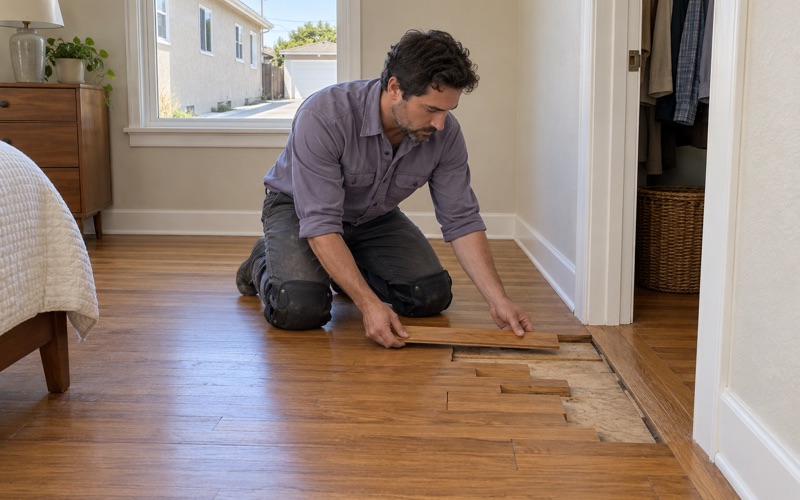
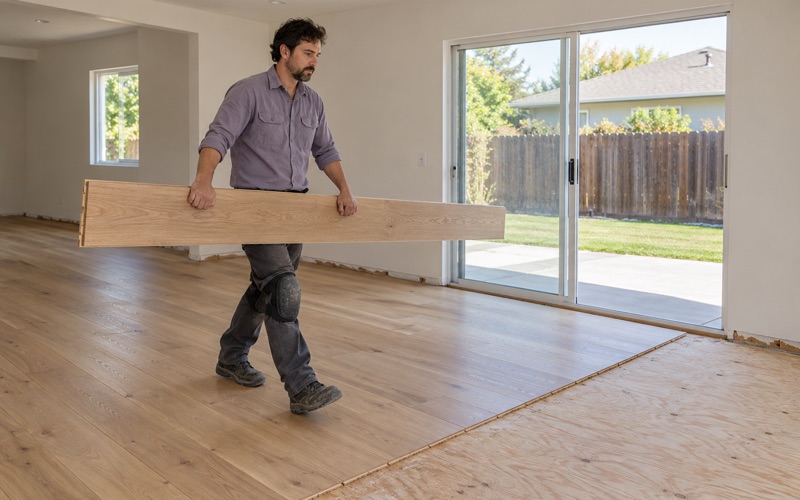
We often weave new boards into an existing floor where a wall has been removed or an addition has been joined to the house. The flooring part of that is craft: matching species and width, cutting in staggered joints, and sanding the old and new boards together so the seam disappears. The wall removal or addition itself is a separate matter, and we ask the owner whether that part has been through the city before we schedule ours.
If the answer is uncertain, we hold the weave-in repair until the owner has checked. Laying finished wood over framing that may later need to be opened for an inspection is money spent twice.
Sagging floors and structural referrals
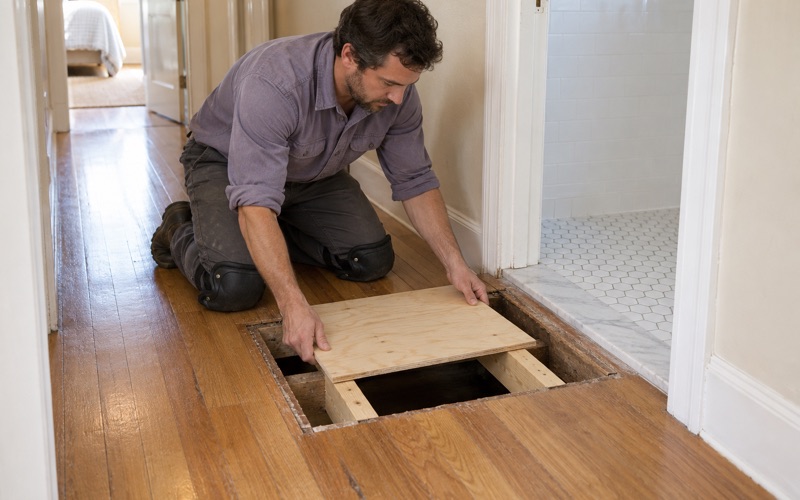
A bouncy floor, a soft spot near a bathroom or a floor that dips toward the middle of a room usually points below the finish boards. We trace those symptoms to the subfloor and the floor joists before pricing anything. Replacing a damaged section of board subfloor under a small area is flooring work; sistering joists or changing how a floor is supported is structural, and we refer that out to the right trade.
Keeping those two jobs separate protects the owner. Our estimate describes only what we did, and the structural contractor’s paperwork describes theirs.
Moisture problems with a source
Cupping, crowning and buckling are rarely the wood’s fault. We find the source first, whether a supply line, a water heater or a leak at a fixture, and we document it with photos and moisture readings an adjuster can use. When the fix involves plumbing, that is another trade and another conversation with the owner about what the city may want to see.
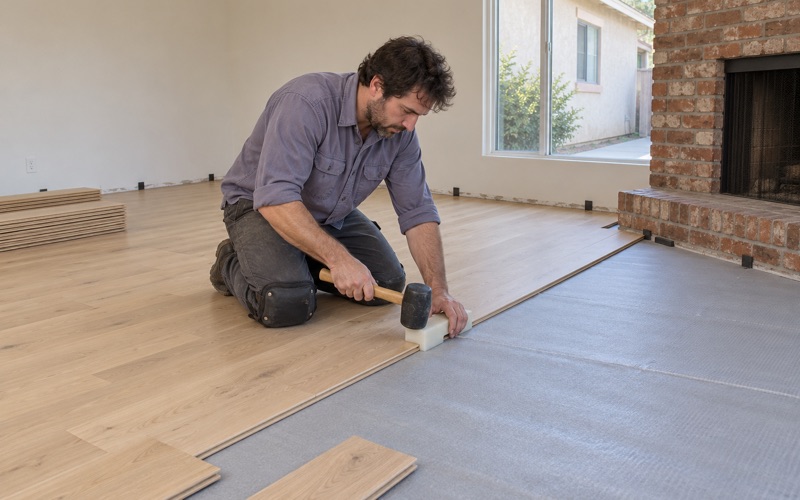
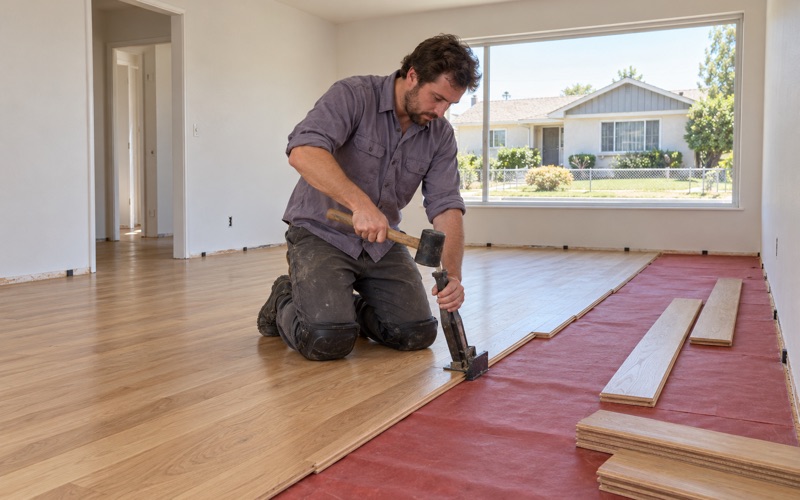
New wood then acclimates in the house until our wood moisture meter shows its moisture content is close to the subfloor’s. Over concrete we run an ASTM F2170 in-situ relative humidity test or a calcium chloride moisture test before choosing between a glue-down and a floating installation.
What City Staff Say About Repair Needs
Artesia’s October 2021 draft housing element records an estimate from the people who see the most houses. Based on observations by city building inspectors and code enforcement staff, about 10 percent of housing units need minor repairs, while 2 to 3 percent may need more substantial rehabilitation. The same draft says housing in the northern part of the city is more likely to need maintenance and repairs.
What that estimate means for floors
A worn finish, loose boards or gaps along one wall are the kind of minor repair most owners handle without much thought. A floor over a damaged subfloor in a house that also needs electrical, plumbing or framing work is closer to the rehabilitation end of the scale. We tell owners which of the two we are looking at, and when a floor is really a symptom of the second, we say so before we quote.
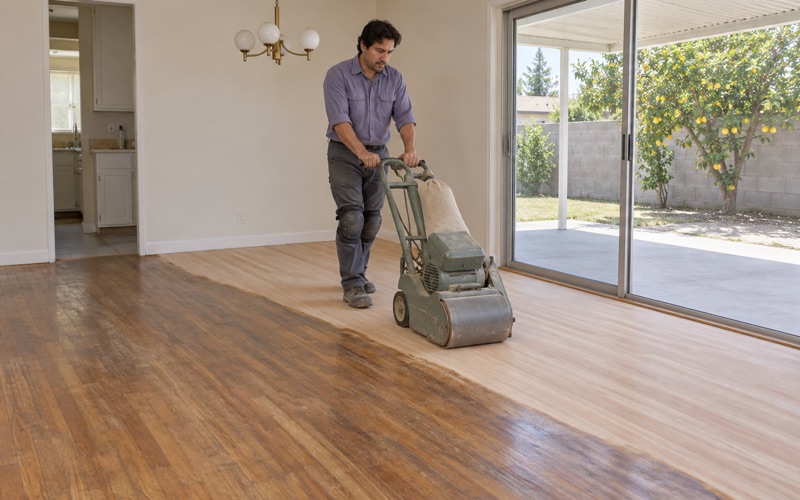
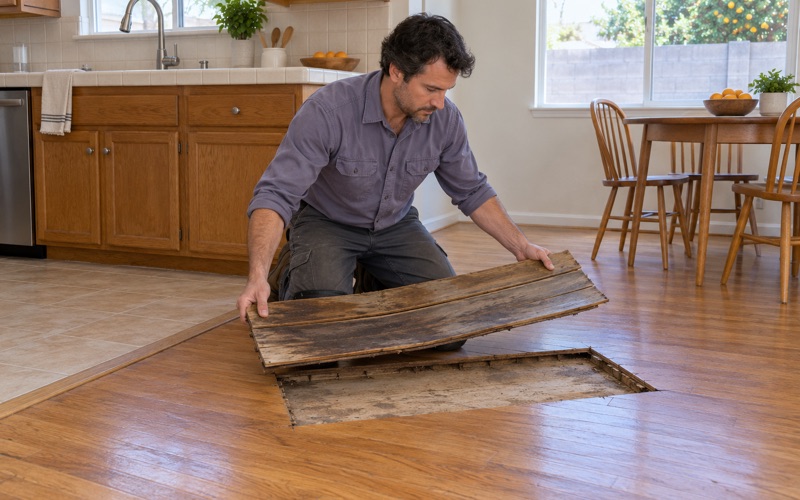
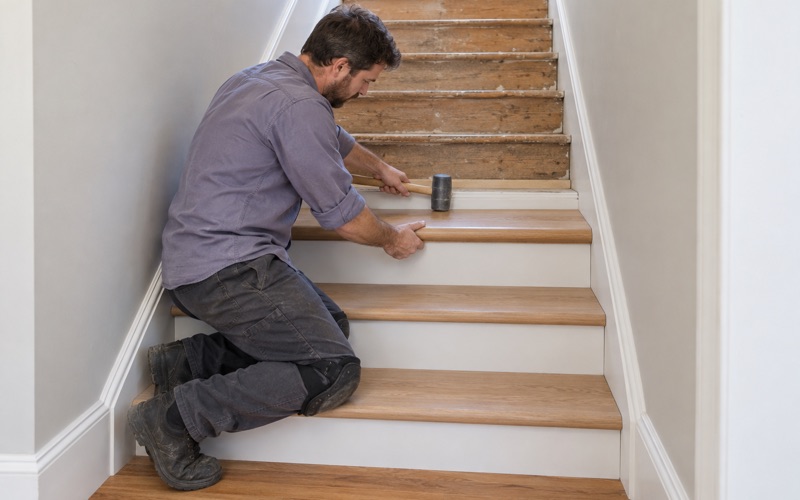
Minor floor repairs are usually the ones we can finish in a day or two: a board replacement, a stair tread, a patch around a floor register or a screen and recoat on a dull finish. When the finish is peeling or pet urine stains have turned the wood dark, a full sand to bare wood is the more honest answer.
An older housing stock
Census figures show 76.2 percent of Artesia’s housing units were built before 1980. For flooring, age changes the method. Older homes can hide linoleum, rubber tile or 9x9 tile under carpet, sometimes over black mastic, and we treat any of those as a possible asbestos question before anything is scraped. An asbestos survey comes first when the material is suspect.
Age also brings lead. In houses built before 1978 we follow lead-safe work practices under the EPA Renovation, Repair and Painting rule, because sanding painted trim or old finishes can put lead dust into the air. We contain the room and run a dustless sanding system on the drum sander, edger and orbital sander.
Owners, renters and detached houses
About 68.0 percent of Artesia’s housing units are one-unit detached houses, and nearly half of the city’s renters rent a detached house. That shapes who calls us. A landlord replacing a floor between tenants needs the same clean file as an owner-occupant, and often needs it faster, so we give landlords a written cure schedule showing when each room can be used again.
Checking With Building and Safety First
Before a larger job, the right call is to the city’s Building & Safety office at 18747 Clarkdale Avenue. We do not tell owners what the city will or will not ask for on a given project, because that answer belongs to the city and can depend on everything else happening in the house.
Questions worth bringing to the counter
Describe the whole project, not just the floor. Tell the office whether walls are moving, whether an addition is involved, whether plumbing or electrical work is part of it, and whether the subfloor or framing will be opened. Ask what the city needs to see and when. Then share the answer with every contractor on the job, including us, so the schedule follows it.
Bring a simple sketch of the rooms involved and a list of materials if you have one. A clear description at the counter tends to get a clear answer, and it keeps the owner in charge of the conversation with the city.
If the job is only a refinish or a board replacement in a room nobody is changing, some owners still like to confirm. We are glad to wait a day for that call.
What an owner should keep on file
We hand over a line-by-line written estimate that separates labor, materials and removal. We add the moisture readings taken before material was ordered, the product names and data sheets for every finish, and a note that each finish is legal under SCAQMD Rule 1113 and its 275 g/L wood-coating limit. When older tile or mastic was involved, the asbestos survey results go in the same folder.
Keep photos of the floor before, during and after the work, and keep the cure schedule. If a question ever comes up, a dated folder answers it in minutes rather than in weeks.
If a notice arrives anyway
Read the notice for what it actually names, and note the date, because the 21-day window is already running. Contact the code enforcement office to understand what is being asked. If our floor work is part of the question, we will pull our records for that job and put them in your hands the same week.
- 20+ Years in Wood Flooring
- Line-by-Line Written Estimates
- Lead-Safe Sanding on Pre-1978 Homes