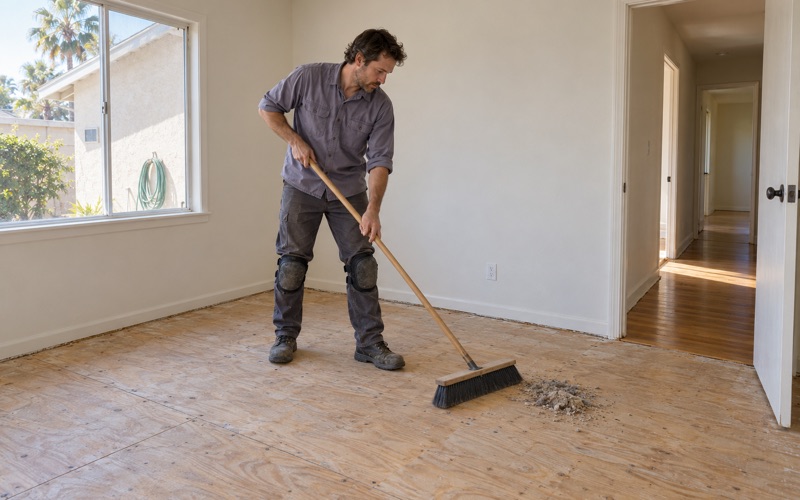
Lakewood Wood Flooring has spent more than 20 years on wood flooring in Bellflower and the neighboring cities, and the houses that need the most care are the oldest ones. A hardwood floor in a house built before 1978 is rarely the only surface in the room. Painted baseboards, door casings, window sills and stair risers sit right at the edge of every board, and a floor project disturbs all of them.
That is why our first visit to an older house covers more than the floor. We look at the condition of the paint around the room, ask when the house was built, and ask who lives there. If the answers point toward a lead hazard, the right order of work changes, and we would rather settle that before quoting a sander than after.
The rest of this page explains how a free county lead program open to Bellflower residents fits ahead of a refinish, why sanding waits, and what owners, landlords and renters should sort out before any floor work starts.
Bellflower’s Free Lead Paint Hazard Program and the Homes It Reaches
The City of Bellflower has posted a notice for Lead-Free Homes LA, a Los Angeles County program run with the Department of Public Health and the LA County Development Authority. The notice says the county is offering free lead-based paint hazard remediation services for eligible residents in Bellflower. For a household planning floor work in an older house, that notice deserves attention before anyone signs a flooring contract.
What the notice offers
The program removes interior and exterior lead paint hazards at no cost to the household. The program’s own site adds that, if needed, it will make all arrangements for temporary housing or relocation during repairs. The city’s notice prints an enrollment period of August 1 through October 31, though it does not print the year, so check the current window with the program before counting on it.
What the program does not describe is floor work. Nothing we have read itemizes what the remediation includes beyond removing lead paint hazards, so we treat it as a separate job that happens first, not as part of the flooring budget.
The eligibility test
The screening is short: the home must have been built before 1951. The paint must be chipped, cracked or otherwise deteriorating. And the household must include a child under 6, either living there or visiting, or a pregnant resident. A house that clears all three is exactly the kind of house where we would pause a sanding job anyway, so the overlap with floor work is real.
How much of Bellflower is that old
Bellflower was founded in 1906 and did not incorporate until 1957, so part of its housing is older than the city government itself. Census figures count 3,650 of the city’s 24,683 housing units, or 14.8 percent, as built before 1950. That is roughly one home in seven. The pre-1978 pool is far larger: 71.4 percent of Bellflower’s units predate 1980, and most of those fall in the years when lead paint was still sold for homes.
Looking for wood-flooring closer to Hawaiian Gardens? See Hawaiian Gardens Wood-Flooring.
Why Lead Comes Before Sanding
A wood floor itself is not the concern. The concern is everything painted that a floor crew touches, and how fine the dust from that contact can be.
What a floor project disturbs
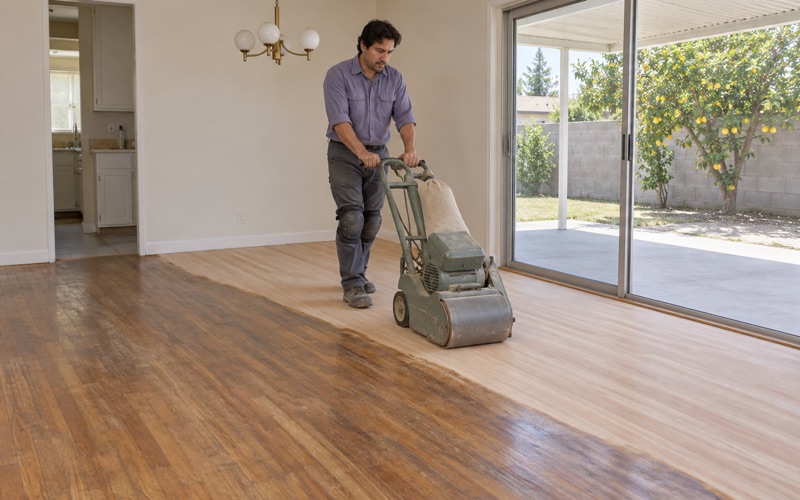
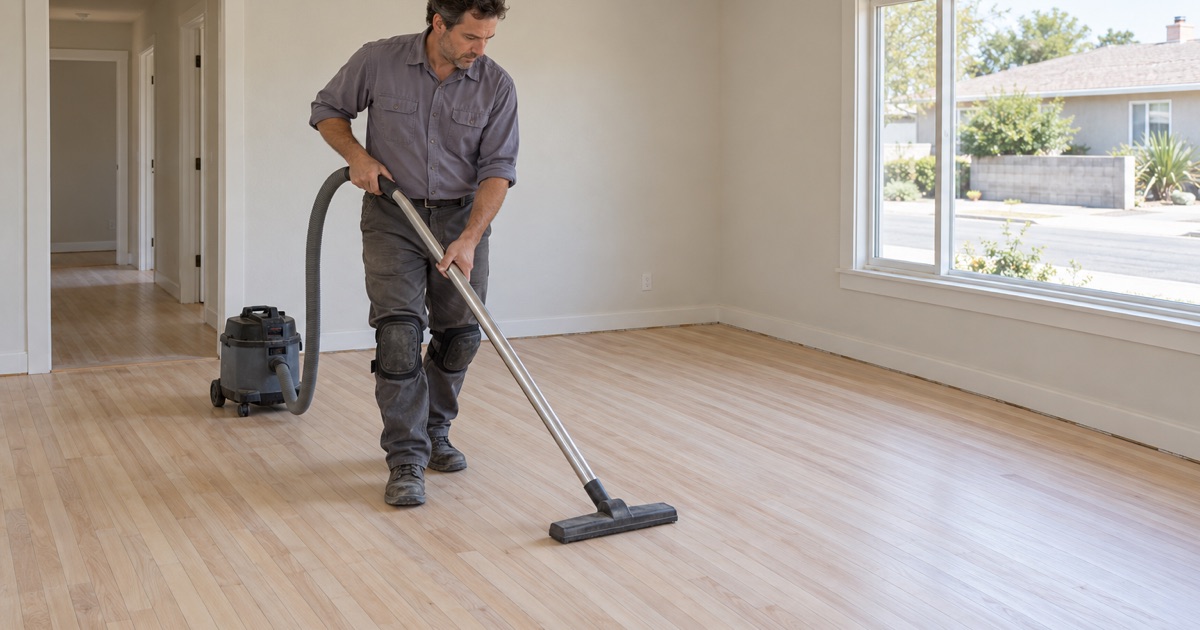
Refinishing starts with pulling shoe molding and sometimes baseboard. An edger runs tight along painted trim, and a drum sander throws fine dust across the whole room. Stair work means sanding treads right below painted risers and stringers. In a house with deteriorating lead paint, each of those steps can turn chips into lead dust from sanding, which settles on the floor, in the gaps between boards and on every horizontal surface, where a small child is most likely to pick it up.
A dustless sanding system cuts down what escapes into the air, but it does not make a lead hazard go away. If paint around the room is already failing, we want it handled by the people whose job that is before we bring in any abrasive.
Pre-1951 versus pre-1978
The county program draws its line at 1951. The federal EPA Renovation, Repair and Painting rule draws a different one: it covers renovation in pre-1978 housing where painted surfaces are disturbed. So a Bellflower house built in 1962 does not meet the free program’s age test, yet it still falls under lead-safe rules for renovation. On every pre-1978 house we contain the work area, protect trim and adjoining rooms, keep dust down, and clean up with lead dust in mind.
That gap matters in Bellflower, where more homes went up in the 1950s than in any other decade. Census figures put 6,298 units in the 1950-1959 span, nearly all of them past the county program’s cutoff and all of them inside the federal rule.
Tear-out raises the same question
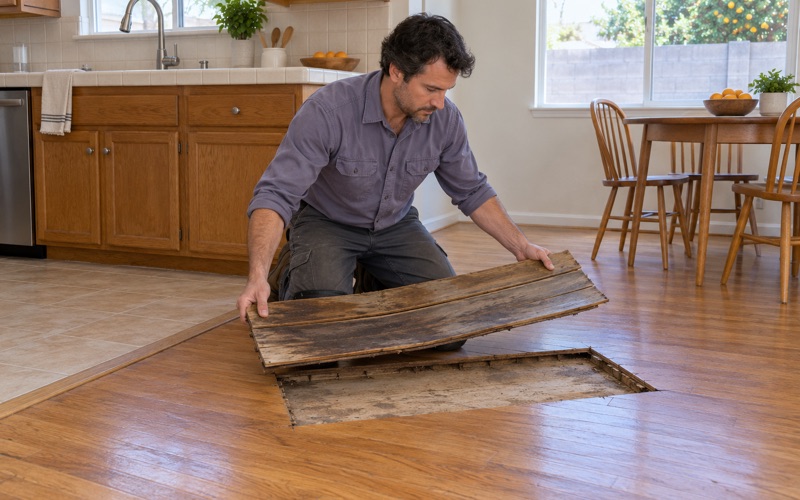
Replacing a floor is not a way around this. Pulling old flooring means prying against painted baseboards and door casings, cutting near painted walls and carrying debris through the house. The same goes for pulling carpet off an old floor: tack strip sits against painted baseboard, and the pad often holds years of settled dust. A tear-out in a pre-1951 house with chipped paint is as good a reason to check the program first as a refinish is.
Owners, Landlords and Renters
The notice is explicit that homeowners, landlords and renters can all apply. That matters in Bellflower, where 60.7 percent of occupied units are renter-occupied, because the person who wants the floor done is often not the person who lives on it.
Homeowners
An owner living in a qualifying house has the simplest path. Apply, let the remediation run its course, and schedule the floor afterward. If the household has to leave while the lead work happens, the program arranges that, which frees you from juggling a move around two separate crews.
Timing is the part owners tend to underestimate. The notice prints an enrollment window, and the program has said it will move to different areas across Los Angeles County, so a household that waits until after a refinish may find the window has closed. If you think you qualify, apply first and hold the floor date loosely until the lead work has a schedule.
Landlords
A landlord planning to refinish between tenancies, or to replace a worn floor in an occupied rental, should ask three questions before calling us: when was the building built, is the paint chipped or cracked, and is there a child under 6 or a pregnant tenant in the unit? If the answers fit the program, the hazard work comes first and the floor second. A landlord who skips that order and sands a pre-1951 unit with failing paint can end up with a floor that looks new and a room that is less safe than before.
Renters
Renters can apply too, which is worth knowing if you have a toddler and see paint flaking onto the floor. Floor decisions in a rental still belong to the owner, so we will not start work in a rented unit without the owner’s go-ahead, but a tenant raising the program with a landlord can be how the right order of work gets started.
Because renters are eligible in their own right, a tenant does not need to wait for a landlord to notice flaking paint before starting the screening. The pre-screening questionnaire asks when the home was built, whether the paint is chipped or cracked, and whether young children live there.
Planning a Refinish After Remediation
Once the lead paint hazards are gone, the floor becomes an ordinary flooring job again. The planning below is what we walk through with Bellflower households at that point.
Settle these first
Confirm that the remediation is finished and that you have whatever paperwork the program provides. Find out whether any trim was replaced or repainted, because new baseboard or shoe molding affects how we remove and reinstall it. Decide which rooms need to stay usable, since a household that has just come back from temporary relocation rarely wants to move out of the bedrooms again the next week.
Assessing the floor
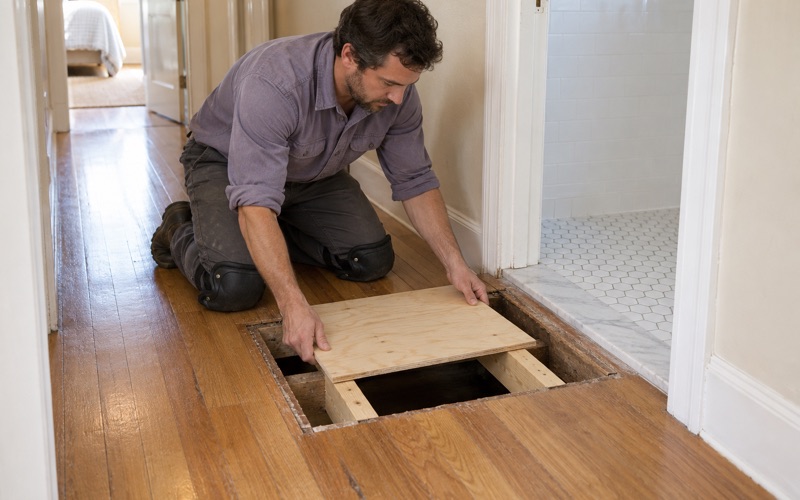
We start by finding out what is actually there. An older house may have hardwood under carpet or linoleum, and we check it before anyone talks about replacement. We take readings with a wood moisture meter and write them down, because old floors that have lived through leaks show it in the boards. Soft spots, bounce or sagging get traced down to the subfloor and the floor joist before we price a finish floor, and anything structural is referred out rather than hidden under new boards.
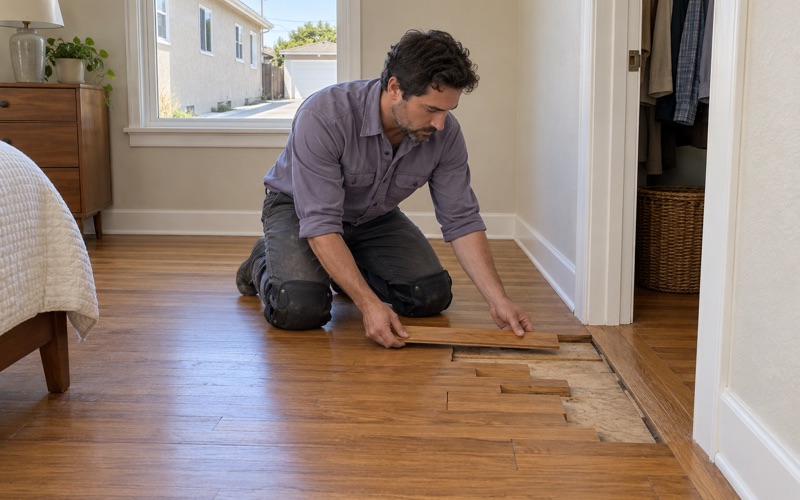
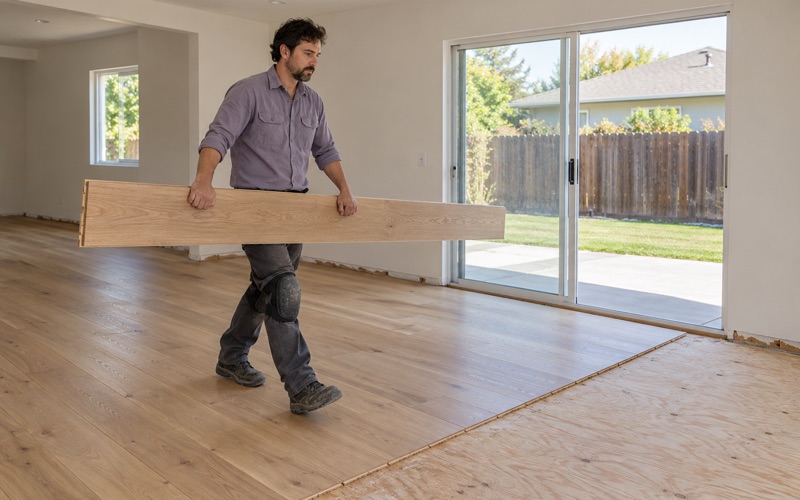
Where a wall was moved or a patch of boards is ruined, we weave new boards into the existing floor so the repair does not read as a patch. Old linoleum, rubber tile or 9x9 tile gets treated as a possible asbestos question before anything is scraped, the same caution the lead step asks for.
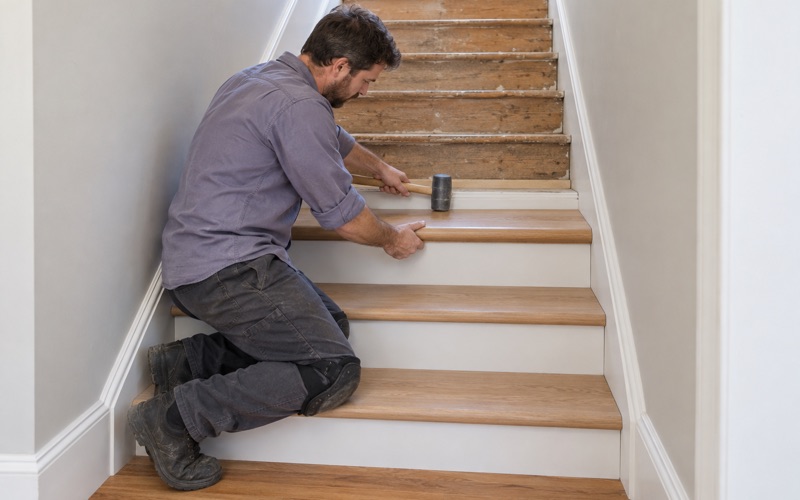
Stairs get their own line. Treads, risers and nosing are priced per tread and riser rather than folded into a square-foot number, which matters in an older house where painted risers may have been repainted or replaced during the lead work.
Finish and cure schedule
Finishes are chosen from products legal in the South Coast air basin, where SCAQMD Rule 1113 caps wood coatings at 275 g/L. A waterborne polyurethane dries faster and smells less, which suits a household that has already been displaced once. An oil-modified finish takes longer to cure. Either way, you get a written cure schedule showing when each room can take foot traffic, furniture and rugs, and a line-by-line estimate that separates stairs, repairs and finish coats so you can see what the floor costs apart from anything else in the house.
Species and color decisions come last. Sanding back an old floor shows what it really is, and choosing a stain before that point means guessing.
- 20+ Years in Wood Flooring
- Line-by-Line Written Estimates
- Lead-Safe Sanding on Pre-1978 Homes