Lakewood Wood Flooring brings more than 20 years of work to wood flooring in El Segundo, and most of the planning here starts with something you cannot see on the floor at all: the moisture in the air around it. A house near the water takes on moisture through early summer and gives it back through the dry part of winter. Wood swells and shrinks with that cycle, so we plan every install, refinish and repair around it.
Before we quote a job, we take moisture readings in the existing wood and, wherever there is concrete, in the concrete too, and we write the numbers down. We also look under carpet and vinyl to see what is already there, because a floor that can be sanded and refinished often beats one that has to be torn out. Only then do we talk about species, board width and finish.
The calendar gets the same attention as the boards. A coat of finish that levels beautifully on a clear winter afternoon can act differently on a gray summer morning, so the timing of each step is written into the estimate rather than settled on the day.
Wood Floors Under El Segundo’s Marine Layer
Anyone who has lived near Santa Monica Bay knows the low gray ceiling that sits over the coast on early summer mornings. For a wood floor, that marine layer is more than a view. It is a sign of moist air that finds its way indoors through doors, windows and ventilation, and a floor answers to it.
What the Airport Weather Station Records
The best long record for this stretch of coast comes from the Los Angeles International Airport weather station, which sits across Imperial Highway on the city’s northern border. NOAA’s 1991-2020 hourly climate normals for that station give a typical reading for every hour of every day of the year. The station is technically in the City of Los Angeles, not inside El Segundo, and it measures outdoor air rather than the inside of any house.
Even so, it is a fair guide for local homes. The station and El Segundo’s own interior point both fall in National Weather Service forecast zone CAZ366, named Los Angeles County Beaches, so the forecasters treat them as one weather area. We use the station’s numbers to plan the seasons, not to predict the conditions in a particular living room.
Why We Watch the Dew Point
Dew point is the measure of how much water is actually in the air, and it is the number that matters most to wood. On June 1, the station’s normal dew point is 55.4 degrees at 4:00 a.m. and 55.9 degrees at 1:00 p.m. The sun warms the afternoon, but the moisture load stays near 55 degrees around the clock.
That steadiness is the point. A floor in a coastal house does not get a daily break from summer moisture the way a floor farther inland might. It sits in the same damp air for weeks, and the wood gradually takes on moisture until it reaches a new balance.
Looking for wood-flooring closer to Palos Verdes Estates? See Wood-Flooring in Palos Verdes Estates.
Summer Mornings, Winter Afternoons
The seasons at the airport station look alike on a thermometer and very different on a moisture chart. Highs barely move across the year, with monthly normal highs ranging from 65.6 degrees in February to 76.7 degrees in August. The air’s moisture moves far more than that.
Early June: Overcast and Damp
On June 1 the sky at the station is normally overcast 56.3 percent of the time at 4:00 a.m., with a temperature of 60.2 degrees. By 2:00 p.m. the overcast frequency has fallen to 8.0 percent as the marine layer burns off. The morning is gray and cool while the afternoon is bright, yet the dew point barely changes between them.
NOAA does not publish relative humidity in these normals, so we computed it ourselves from the temperature and dew point. On that basis, relative humidity works out to about 84 percent at 4:00 a.m. on June 1 and about 65 percent at 1:00 p.m. Those are outdoor figures, and they are the reason damp mornings matter to finish work.
Early December: Clear and Dry
December turns the pattern around. On December 1 the station’s normal dew point is 40.6 degrees at 4:00 a.m., with overcast skies just 16.2 percent of the time. At 1:00 p.m. the temperature reaches 65.5 degrees against a dew point of 41.7.
Computed the same way, relative humidity comes to about 62 percent on an early December morning and about 42 percent in the afternoon. The gap between roughly 84 percent on a June morning and roughly 42 percent on a December afternoon is the seasonal swing a coastal wood floor has to live through.
What the Swing Does to Boards
Solid wood gains moisture and widens across the grain in the damp season, then gives it back and narrows in the dry one. In practice that often means thin gaps between boards in winter that close up again by early summer. Seasonal gaps of that kind are normal behavior for a solid wood floor, not a defect.
Trouble starts when the movement goes further than the floor was built to allow. Cupping, where board edges rise above the centers, points to moisture reaching the underside. Buckling, where boards lift off the subfloor, usually means the floor was installed too dry or without enough room to expand, and both are problems we try to prevent at install rather than repair later.
Acclimating and Installing for a Coastal Swing
Most seasonal problems we are called to fix trace back to the day the floor went in. Wood that was installed at the wrong moisture content, or without room to move, will show it within a year of seasons.
Acclimation Is Measured, Not Counted in Days
Acclimation means letting new flooring reach a moisture content close to the conditions of the house before it is fastened down. We follow the NWFA installation guidelines and check progress with a wood moisture meter, comparing the boards against the subfloor rather than counting a fixed number of days. The readings go on paper so you can see why we started when we did.
Where a floor goes over concrete, the concrete gets tested too. We use the ASTM F2170 in-situ relative humidity test or a calcium chloride moisture test, record the results, and choose a vapor retarder or a different installation method when the numbers call for one. Material is ordered only after those readings are in.
Expansion Room and Board Choice
Every wood floor needs an expansion gap at the walls, hidden later under baseboard and shoe molding. On a coastal job we pay particular attention to that gap at doorways and long runs, where a reducer strip or T-molding lets the floor move without pushing against a fixed edge.
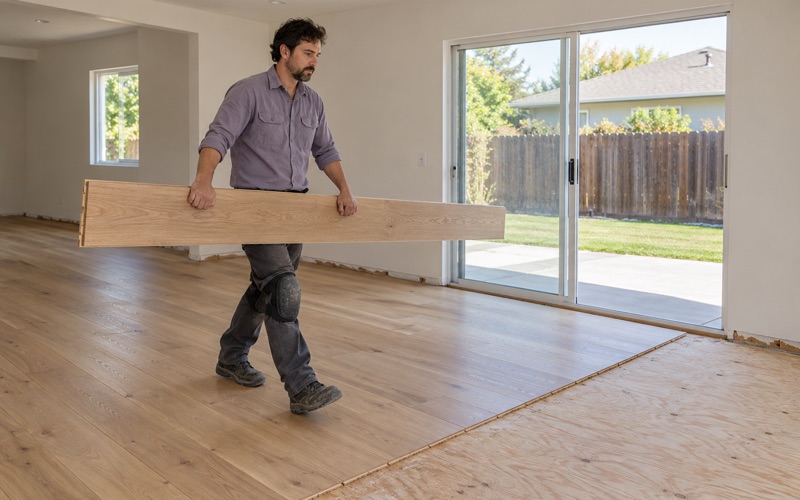
Board choice matters as well. Wide plank solid boards move more per board than narrow strips, which is one reason many coastal homeowners choose engineered core construction for wide planks. White oak, red oak, hickory and maple each carry a different Janka hardness rating and a slightly different response to moisture, and we walk through those differences before anything is ordered.
Nail-Down, Glue-Down or Floating
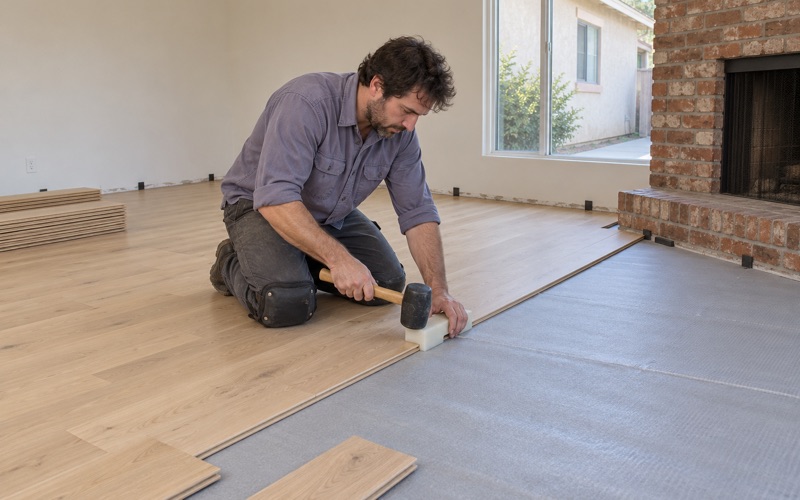
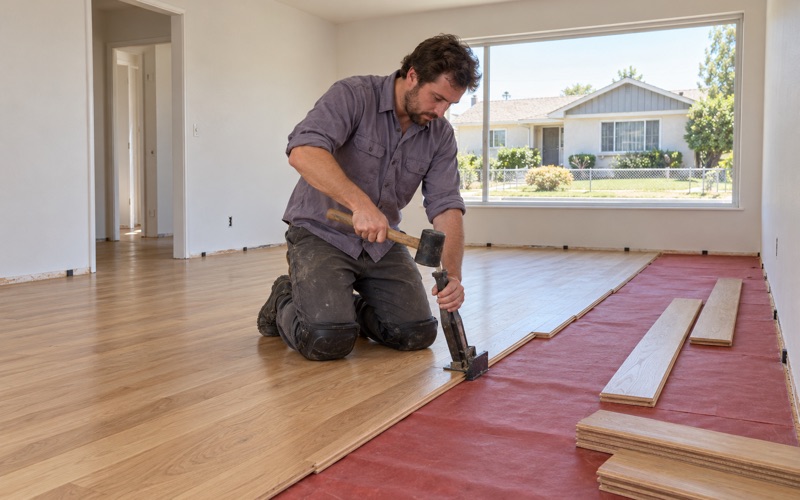
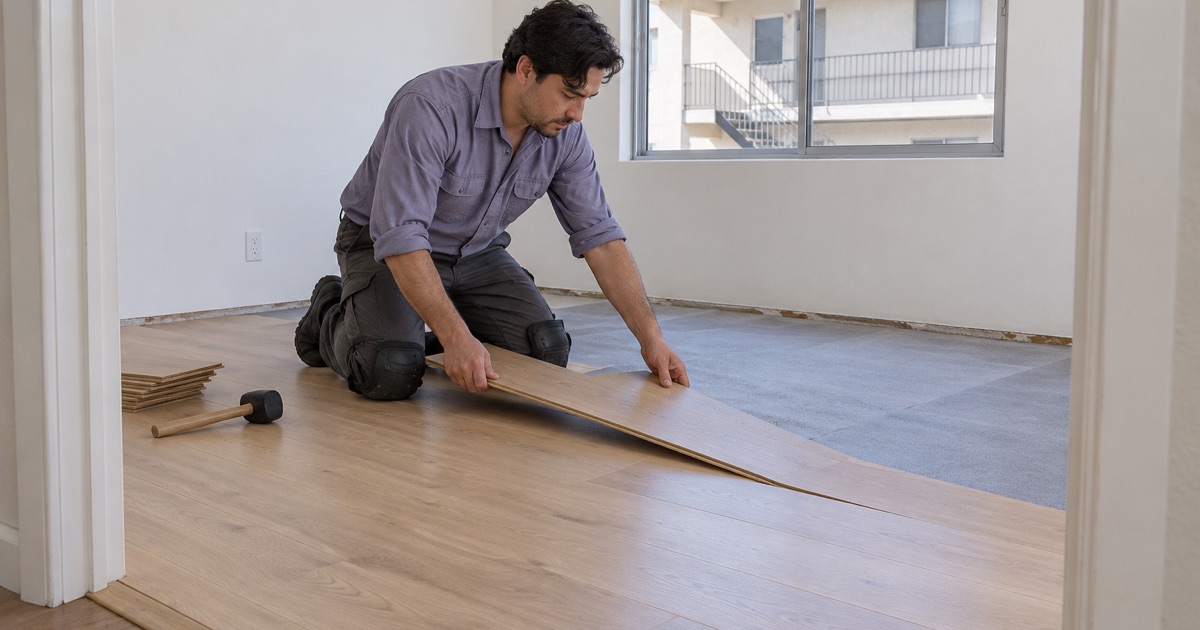
Solid hardwood over a wood subfloor is usually a nail-down installation with cleat nails or flooring staples. Engineered boards over concrete are often glued down, while a floating installation can suit a room where fastening is not practical. We base the method on what is under the floor and on the moisture readings, not on habit.
Planning Floor Work in El Segundo
El Segundo was incorporated in 1917, and roughly three quarters of its land is given over to industrial and commercial uses, which leaves a comparatively small residential area. Of the city’s housing units, 73.4 percent predate 1980, and renters occupy 57.5 percent of occupied homes, most often in buildings of five to nine units. Both facts shape how floor projects here are planned.
Timing Finish Work Around the Weather
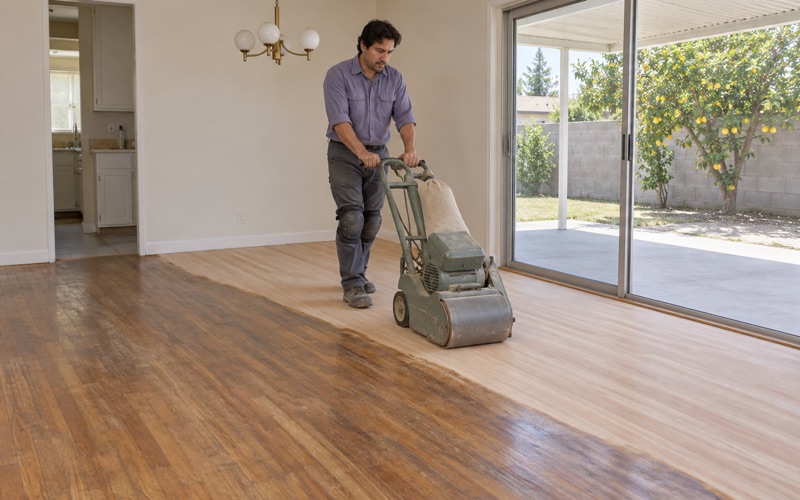
Sanding is less sensitive to the weather than finishing is. We prefer to put finish coats down after the morning overcast has cleared, giving each coat the drier, brighter part of the day to level and begin curing. In summer that usually means midday coats, while in winter the drier air helps finishes along but calls for watching dry time between coats.
We work with waterborne polyurethane, oil-modified polyurethane and hardwax oil finishes chosen from products that meet the 275 g/L VOC limit for wood coatings under SCAQMD Rule 1113. Every job comes with a written cure schedule, so the household knows when each room can take foot traffic, rugs and furniture again. We keep the work inside the city’s permitted construction hours.
Older Homes and Rental Units
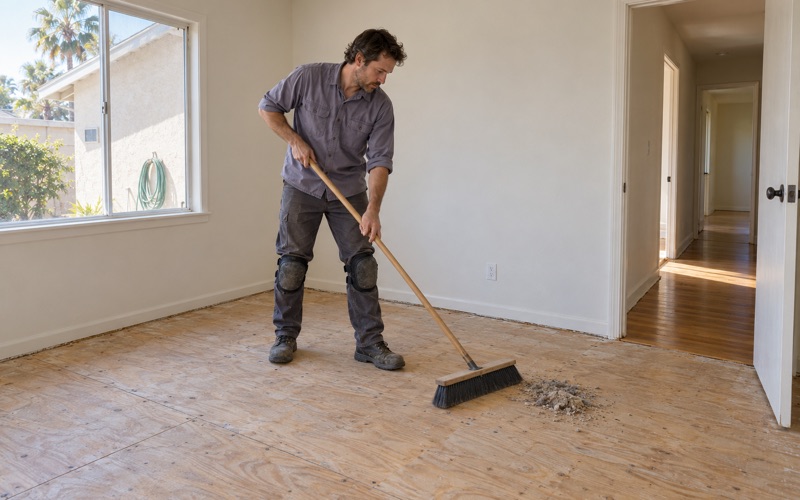
In a house built before 1978, sanding can raise lead dust from old paint on trim and baseboards, so we follow lead-safe practices under the EPA Renovation, Repair and Painting rule. Old linoleum, rubber floor tile, 9x9 tile and black mastic are treated as a possible asbestos question, and an asbestos survey comes before anything is scraped or sanded.
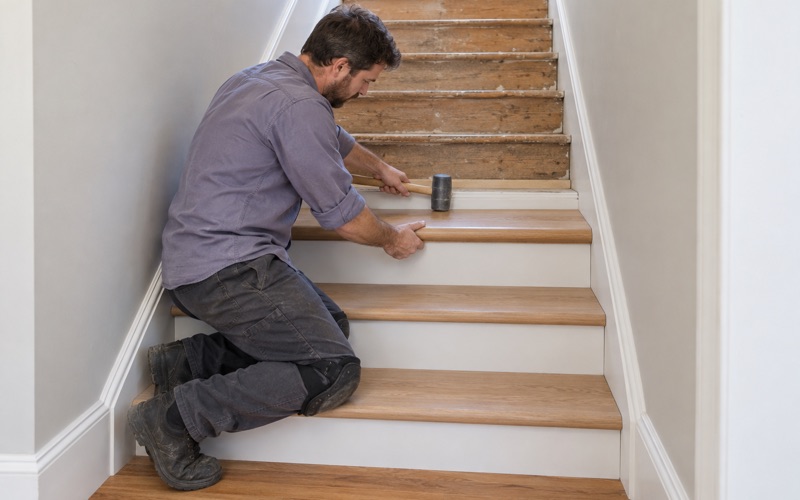
For owners of apartments and small rental buildings, we price each unit on its own line and set a schedule that keeps turnover moving. Stairs are priced per tread and riser rather than folded into a square-foot number, which makes the estimate easy to compare across units.
Repairs, Water Damage and Soft Spots
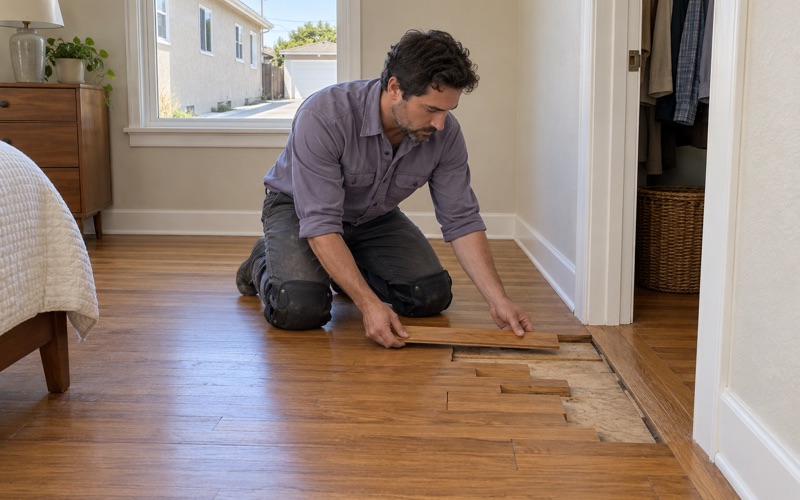
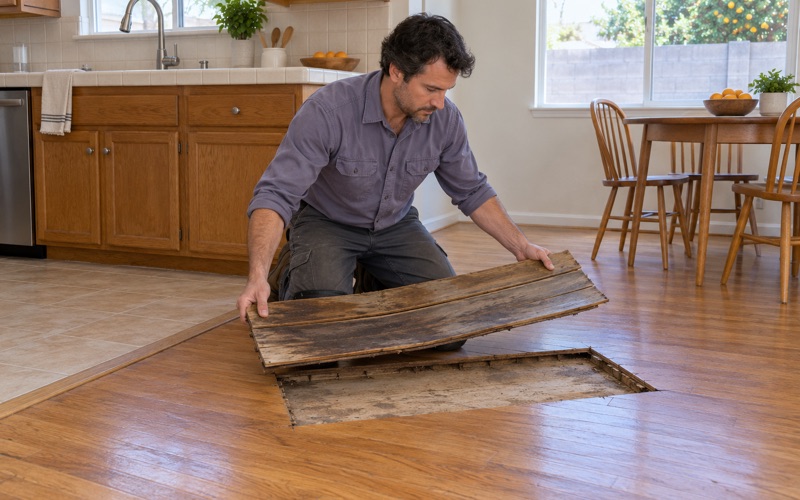
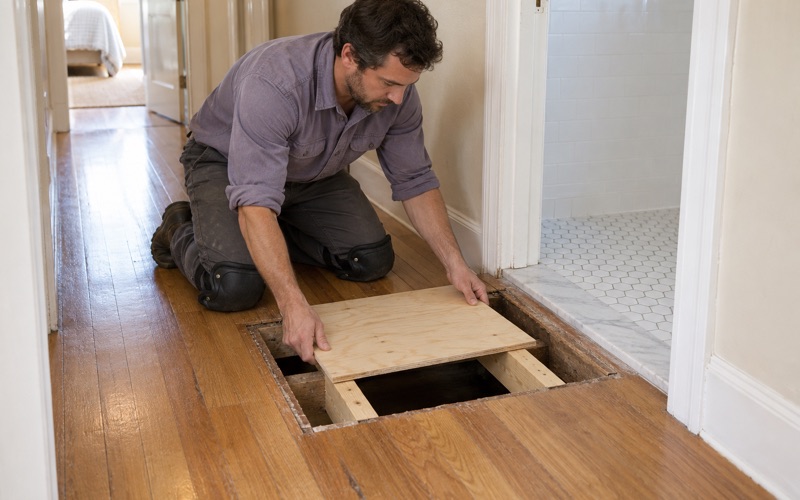
When a wall comes out or a room changes shape, we weave new boards into the existing floor so the repair does not read as a patch. A bouncy or sagging spot is traced to the subfloor and floor joists before a new floor is priced, and structural fixes beyond a flooring job are referred out.
Water damage gets traced to its source first, whether a supply line, a water heater leak or an aging pipe. We document the damage with photos and moisture readings an adjuster can use, and we provide the line-by-line written estimate the California Department of Insurance tells homeowners to ask for on a claim.
- 20+ Years in Wood Flooring
- Line-by-Line Written Estimates
- Lead-Safe Sanding on Pre-1978 Homes