
Lakewood Wood Flooring repairs hardwood floor water damage in Lakewood, CA and has worked on wood floors for more than 20 years, serving surrounding cities including Artesia, Bellflower, Hawaiian Gardens, Cerritos and Signal Hill. When a dishwasher line, water heater, toilet supply or pipe under the house soaks a floor, we trace the water to its source, document the damage, and plan the drying and repair around measured readings.
Water damage in hardwood rarely stays where you can see it. Moisture moves into the subfloor, travels along the boards and sits in the crawl space under a raised foundation, so a floor that looks dry on top can still be wet underneath. We take moisture readings in the wood, the subfloor and any concrete, and we record them with photos so your adjuster has something concrete to work from.
Our estimates are written line by line, the format the California Department of Insurance tells homeowners to ask for on a claim. Board removal, subfloor repair, new material, sanding and finish each appear as separate items, which makes the scope easier for everyone to compare and agree on.
Finding the Source and the Extent of the Water
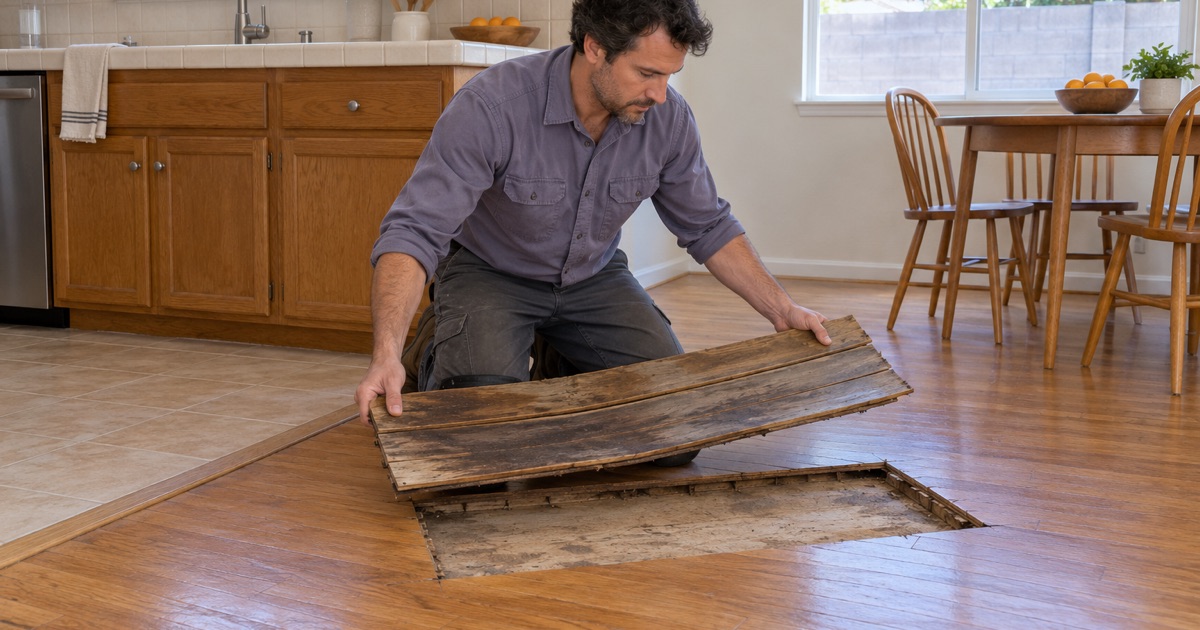
Common Leak Sources in Lakewood Homes
Most floor water damage we see starts with a small, slow leak: a dishwasher supply line, a refrigerator ice-maker line, a toilet supply, or a water heater that has begun to fail. In homes built in the 1950s, aging pipes under a raised foundation can also leak for months before anyone notices the floor above.
We look for the source first because drying and repair are wasted if the water keeps coming. Where the leak is a plumbing problem, we tell you what we found so the plumber can fix it, and then we plan the floor work around that repair.
Mapping Moisture Across the Floor
We use a wood moisture meter to map moisture content across the affected area and beyond it, marking where readings return to normal. That map shows how far the water has traveled under boards that look undamaged, and it becomes part of the documentation for your claim.
On a slab-on-grade home, we also test the concrete where needed. On a raised foundation, we look into the crawl space for standing water, wet framing and damp insulation, because moisture trapped below can keep feeding the floor after the leak is fixed.
Photos and Records an Adjuster Can Use
We photograph the damage before anything is removed, record moisture readings with dates and locations, and note the cause of the leak where we can identify it. Those records help when an adjuster inspects after drying has begun and the original condition is no longer visible.
We keep those records with the job and share them with you, your adjuster and any restoration company involved. When a claim runs for weeks, a dated set of readings showing how the floor dried is often the clearest evidence of what was damaged and what was not.
Water Heater Closets and Old Floor Furnace Openings
Water heater closets are a frequent starting point for floor damage in older homes, because a slow tank or fitting leak soaks the subfloor at the closet threshold before spreading under the neighboring hallway. Old floor furnace openings, patched over when the furnace was removed, can also hide weak or water-stained subfloor.
We open those areas when the readings point to them, replace damaged subfloor, and lace new boards into the hallway floor so the repair follows the existing pattern. Where the water heater stays in the same spot, we suggest a drain pan so the next leak is caught before it reaches the floor.
Reading What the Water Did to the Wood
Cupping After a Leak
Cupped boards, with edges higher than the centers, show that moisture came from below. If the leak is stopped and the floor dries, cupping often relaxes, and some floors flatten enough to be sanded and refinished instead of replaced.
The mistake is sanding too soon. A cupped floor sanded flat while still wet will crown as it dries, leaving the centers higher than the edges and making a second repair necessary.
Buckling and Lifted Boards
Buckling happens when boards absorb so much moisture that they push against each other and lift off the subfloor. It usually follows a larger water event or a floor installed without enough expansion gap at the walls, and buckled sections generally need to be removed and relaid.
Before relaying anything, we check whether the fasteners have pulled, whether the subfloor has swelled, and whether the walls left enough room for the wood to move. Fixing those conditions is what keeps a relaid floor from buckling again the next time humidity rises.
Black Stains, Gray Wood and Finish Damage
Water that reaches the wood can leave black stains, especially in oak, while water trapped in the finish leaves a white haze. We test to see which you have, because finish damage can often be sanded and recoated while black stains usually mean replacing boards.
Drying, Repair and Replacement
Drying Before Repair
Once the source is fixed, the floor and subfloor need to dry back to normal moisture levels before any sanding or new installation. We monitor readings over time and only move to repair when the numbers show the wood has stabilized.
Where a restoration company is running drying equipment, we coordinate with them and use their readings alongside ours. Our goal is the same: a floor that is dry enough to repair once, not twice.
Subfloor and Joist Repairs After a Leak
Long-term leaks can rot the board subfloor or plywood underlayment and weaken the joists, particularly near water heaters and kitchens. We open the floor, cut out soft or delaminated subfloor, and sister joists where the repair is within a flooring job.
Structural damage beyond that scope, or damage involving mold, is referred to the right specialist before flooring work continues. We tell you what we found and why before anything is closed back up.
Weaving In New Boards
Where the damage is limited, we remove the damaged boards and weave new ones into the existing floor, staggering the joints so there is no visible seam. The connected area is then sanded and refinished so the stain and sheen match the rest of the room.
On older oak floors, we match species, width and grade carefully, using reclaimed or closely matched stock where needed so the repair does not stand out once finished. Boards salvaged from the damaged area are reused wherever they are still sound.
When Replacement Is the Right Call
If water damage is widespread, the boards have buckled badly, or the floor was already sanded close to the tongue, replacement may be more sensible than repair. We explain the reasons in writing, and where both options are realistic we price them side by side.
Working With Your Insurance Claim
Line-by-Line Estimates and Claims Standards
California’s claims handling rules in 10 CCR 2695.9 set standards for how insurers handle repair estimates, and the California Department of Insurance claims guide advises homeowners to ask for estimates broken out line by line. We write every water damage estimate that way.
That detail helps when your adjuster’s scope differs from ours. Each item, from board removal to each finish coat, is listed separately, so any disagreement is about a specific line rather than a single total.
Matching the Repair to the Rest of the Floor
A repair that leaves a visible patch in the middle of a room is not a finished repair. We plan the scope so the repaired area blends with the surrounding floor, which may mean refinishing the connected room, and we explain that reasoning on the estimate.
Rental Properties and Habitability
For landlords, a water-damaged floor in a rented home can raise habitability concerns under Civil Code 1941.1 if it becomes a hazard. We prioritize the repairs that affect safety, document the work clearly, and schedule around tenants where possible.
- 20+ Years in Wood Flooring
- Line-by-Line Written Estimates
- Lead-Safe Sanding on Pre-1978 Homes