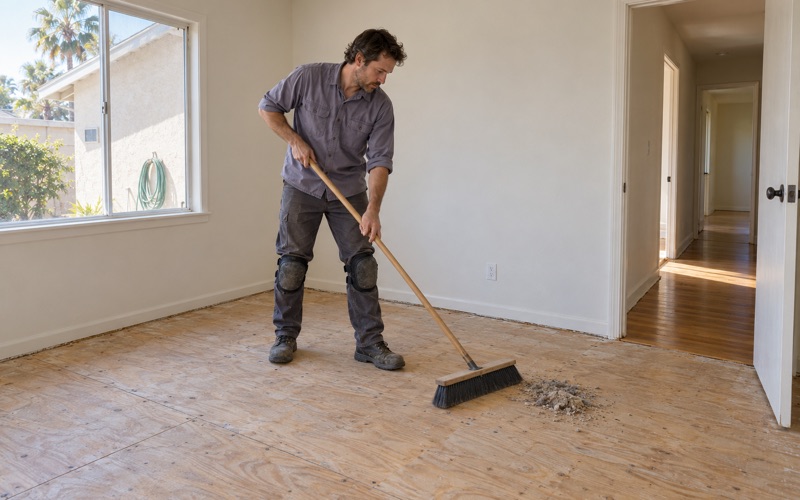
Lakewood Wood Flooring brings more than 20 years of wood-flooring work to Los Alamitos, and many of the jobs we plan here are for owners who have lived in the same house for decades and intend to stay. That changes how a floor project is scoped. The questions are less about resale and more about how the household gets through the work, and how the finished floor serves the people walking on it every day for years to come.
So our first visit covers the people as well as the boards. We ask who will be home during the job, which rooms have to stay usable, and whether anyone in the house uses a cane, walker or wheelchair. Then we look at the finish, the thresholds between rooms and the subfloor before anyone mentions replacing anything.
The sections below cover who owns homes in the city, what the City has set out for older residents, how we run a job with someone in the house, and how we keep transitions flat and floors suited to the way people actually move.
An Older Owner Base in a Renter-Majority City
Los Alamitos is mostly a city of renters. American Community Survey five-year estimates count 4,414 occupied units, and 57.6 percent of them are renter-occupied. The owners are the smaller group, and a noticeably older one.
Who Owns the Houses
Of the 1,872 owner householders, 679, or 36.3 percent, are 65 or older. The same table shows 202 owner households, 10.8 percent of all owners, headed by someone 85 or older. Among renters the picture is different, with 15.0 percent of renter householders aged 65 or older.
Those owners mostly live in detached houses: 81.0 percent of owner households are in one-unit detached homes. The 1960s were the city’s peak building decade, accounting for 28.2 percent of its housing units. Put together, a typical owner-side job here is a mid-century single-family house owned by someone who has probably refinished or recovered its floors at least once already.
What the City Has Set Out
The City of Los Alamitos has developed a Senior Services Master Plan for residents 50 and older. The City Council adopted it unanimously on February 18, 2025, as a 20-year initiative, and the city’s recreation director has described the goal as helping residents age well in their own community. Seniors surveyed for the plan raised uneven sidewalks, poor lighting and difficulty accessing certain areas.
The plan is a city services document, and we do not read it as saying anything about home floors. We mention it because the concerns residents named outdoors, uneven surfaces and edges that are hard to see, are the same ones we look for indoors when an owner plans to stay put.
Why the Horizon Matters
An owner who intends to stay another decade or two is making a different decision from one preparing to sell. Durability, easy cleaning and how the floor feels underfoot count for more than whichever stain color is in fashion. We write estimates with that longer horizon in mind. A floor chosen for the next twenty years should be easy to maintain without heavy equipment or specialty cleaners.
Looking for wood-flooring closer to Cypress? See Wood-Flooring Services in Cypress.
Planning Floor Work Around Someone Who Is Home
Most of our owner-side jobs in Los Alamitos happen with someone living in the house. That is often the sensible choice, since moving out for a week is costly and disruptive, but it only works when the sequence is planned room by room before the first board is touched.
Keeping a Route Open
We start with a floor plan and mark the rooms the household cannot do without: a bedroom, a bathroom, the kitchen and a clear route between them. Work is phased so at least one of those routes stays open and dry at every stage. Where a hallway has to be finished, we schedule it last and on a day agreed with the household in advance.
Furniture is moved in stages too. We shift pieces into finished rooms once the cure schedule allows, so a favorite chair or a bed is never out of reach longer than it has to be.
Dust, Fumes and Cure Times
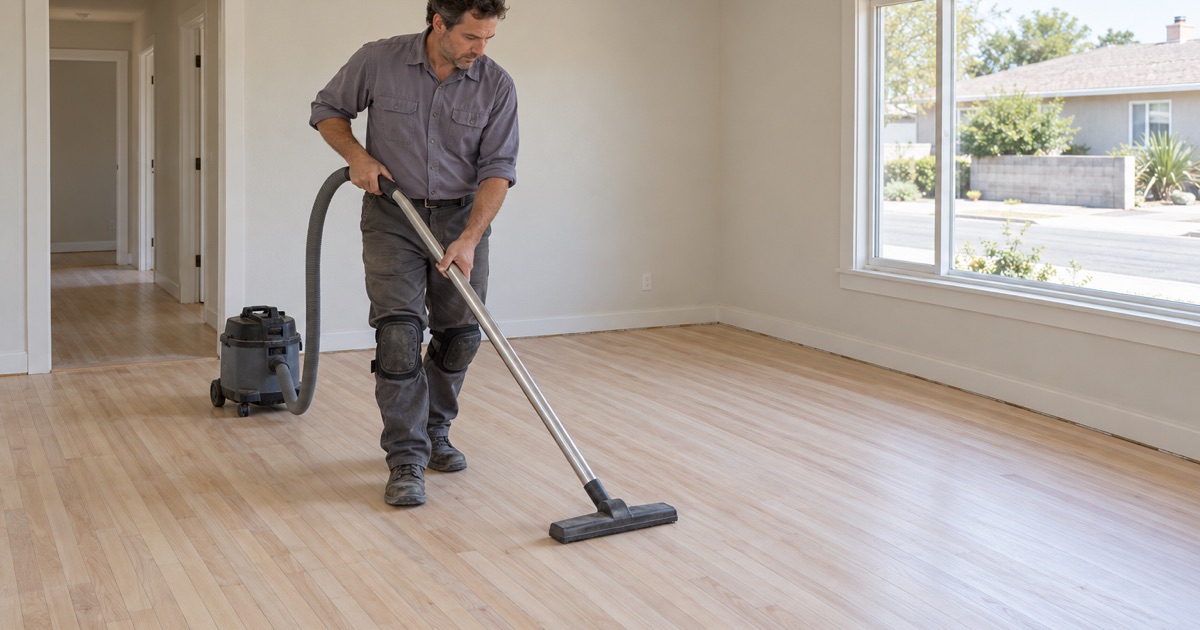
Sanding an older floor raises fine dust, and in a house built before 1978, lead dust from sanding painted trim or an old finish is a real concern. In Los Alamitos, 70.5 percent of housing units were built before 1980, so the question comes up on most jobs. We follow the EPA Renovation, Repair and Painting rule’s lead-safe work practices on those houses, contain the work area and run a dustless sanding system.
Finishes matter just as much for a person who stays home. We use waterborne polyurethane and other coatings that fall within the South Coast AQMD’s 275 g/L wood-coating limit under Rule 1113. Every household gets a written cure schedule showing when each room can take socks, shoes, furniture and rugs, so meals, medications and sleep can be planned around the job instead of guessed at.
Old Layers Under the Carpet
Many 1960s houses have more than one floor under their carpet, and some of those layers are old linoleum, rubber floor tile or 9x9 tile set in black mastic. We treat any of them as a possible asbestos question and arrange an asbestos survey before anything is scraped or sanded. For an owner who will be in the house during the work, that step is never skipped.
Family Members and Helpers
Older owners often have an adult child or neighbor helping with a project, and we are glad to include them. We send the written estimate and the cure schedule to whoever the owner names, and we confirm start dates, room order and daily hours with the owner directly. Nothing about the plan changes without the owner agreeing to it first.
Even Transitions and Floors That Suit Mobility
A floor that suits an owner in their 70s or 80s is mostly about what happens at the edges. The open field of a well-installed floor is usually fine. The trouble spots are thresholds, height changes between rooms and boards that have moved.
Transitions and Trip Edges
Where hardwood meets tile, carpet or vinyl, the two surfaces rarely sit at the same height. We work out thicknesses before ordering material so the difference is as small as possible, then finish it with a low reducer strip or a flush T-molding rather than a raised saddle. Loose shoe molding, lifted board ends and cupped or crowning boards get corrected, because a raised edge is a raised edge whatever caused it.
Stairs and Exterior Doors
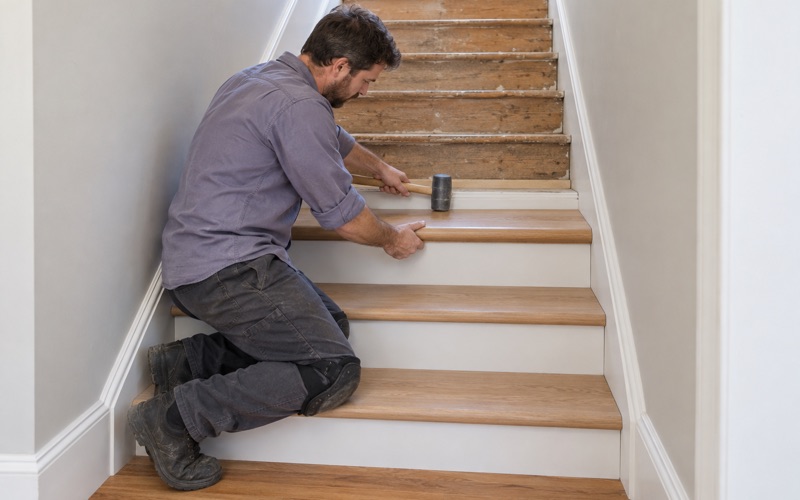
Stairs deserve their own look. A worn tread, a loose nosing or a squeak on the way to the bedroom is worth correcting while the rest of the floor is being done, since the crew and the finish are already on site. At exterior doors, we check that the threshold and the new floor meet cleanly so there is no lip to step over on the way in.
Hardness and Wheels
For owners who use a walker or wheelchair, or expect to, a harder species stands up better to wheels and rubber tips. The Janka hardness rating gives a fair comparison: white oak rates above red oak, maple above both, and hickory higher still. Wide plank boards look generous in a living room, but narrower strips move less with seasonal changes and keep seams tighter under a wheel.
Sheen and Feel Underfoot
Sheen is a separate choice from species. A matte or satin finish shows less glare under low afternoon light and hides wear better than gloss. If an existing finish feels slick, a screen and recoat with a different product is sometimes enough, and we let the owner walk on a sample board in their own slippers before committing.
Rugs, Doorways and Removed Walls
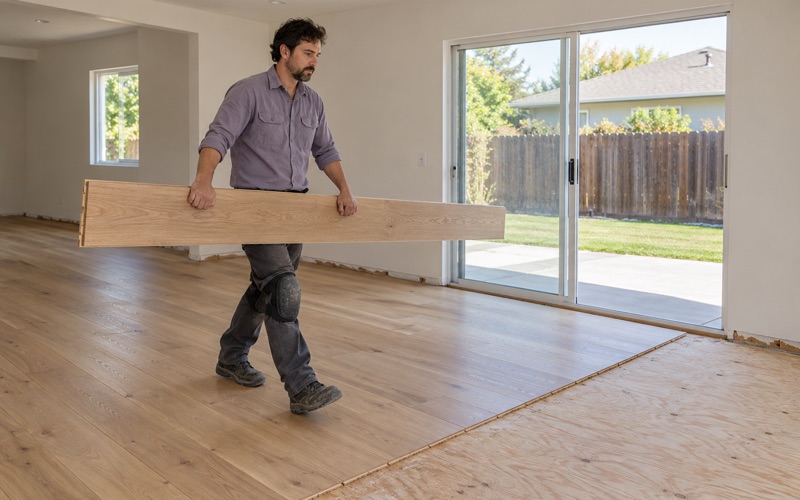
Owners planning to stay often decide to take up area rugs and runners so there is less for a foot or a wheel to catch. We refinish or repair the floor under them and deal with the color difference where a rug sat for years. Where a doorway is widened or a wall comes out, we weave new boards into the existing floor so the repair does not read as a patch.
Refinish or Replace in a Long-Held House
In a house that has been owned for decades, the floor has usually been through several finishes and at least one round of repairs. Whether to refinish or replace depends on how much of it is left and what sits underneath.
Checking What Is There
We measure moisture content in the wood with a wood moisture meter and, where new flooring will go over concrete, test the slab with an ASTM F2170 in-situ relative humidity test before any material is ordered. The readings are written down and kept with the estimate. We also check how much wear layer solid boards have left, because a floor that has already been sanded several times may only have one refinish remaining.
When a Refinish Is Enough
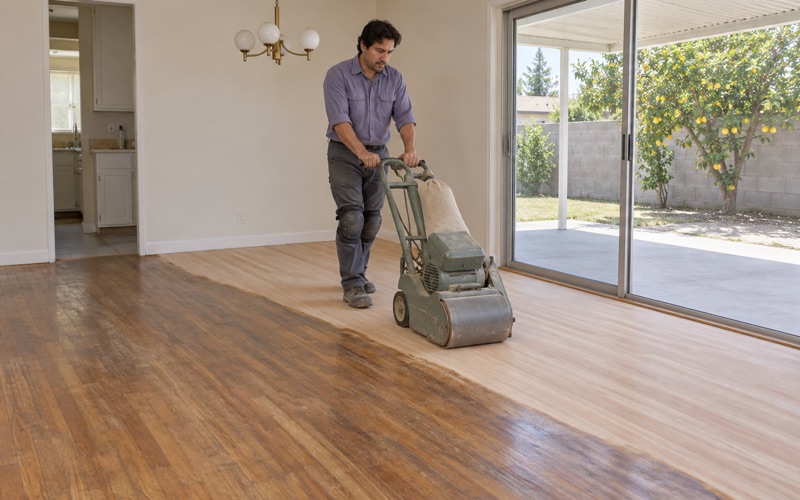
If the boards are sound and the wear layer allows it, a full sand and refinish is the least disruptive path for someone at home. It leaves floor heights unchanged, so every existing transition stays where it is, and the work moves room by room. Board replacement for pet urine stains or old water spots can be folded into the same visit.
Matching a Floor That Has Aged
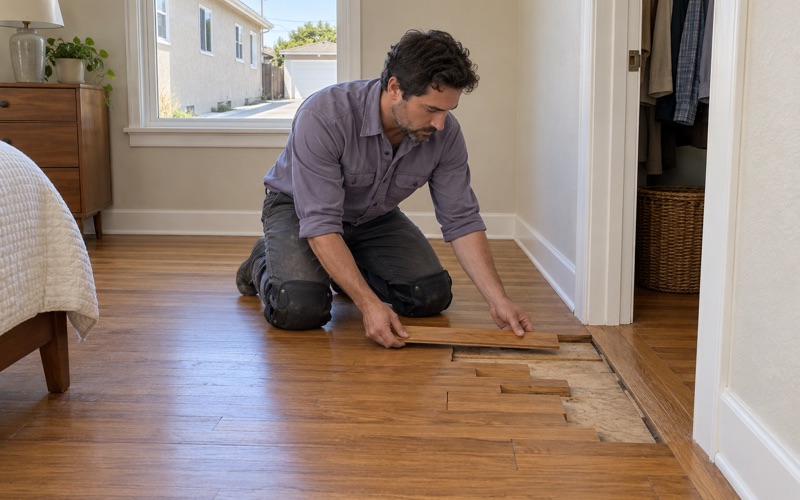
A floor that has been in the same house for decades has aged to its own color, and new boards never match it straight out of the box. When we patch or extend, we sand the whole room together and choose a stain that brings old and new into line, which is also the moment to correct orange oak from an older finish. The result is one floor rather than a floor with a visible repair.
When Replacement Makes Sense
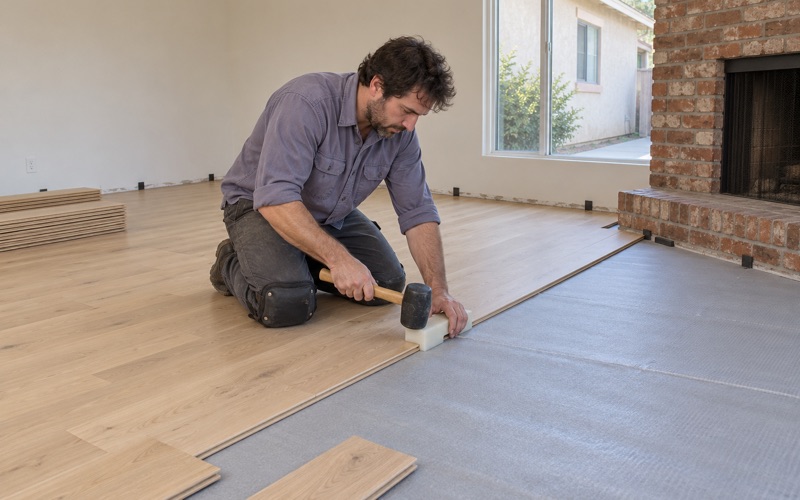
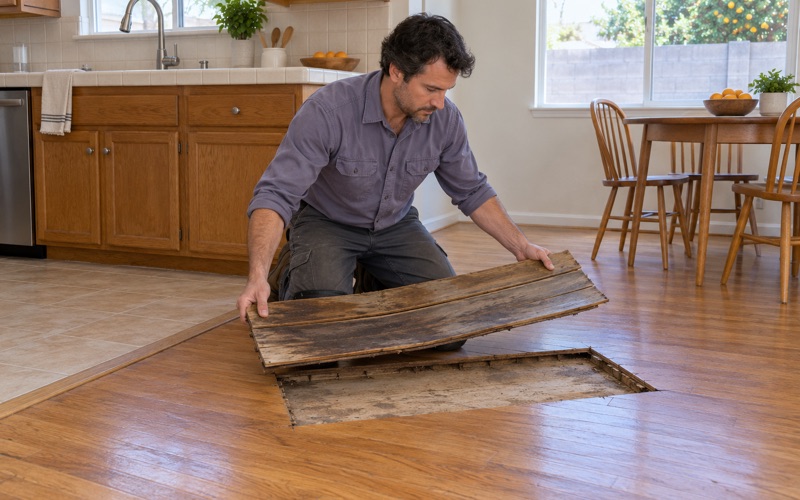
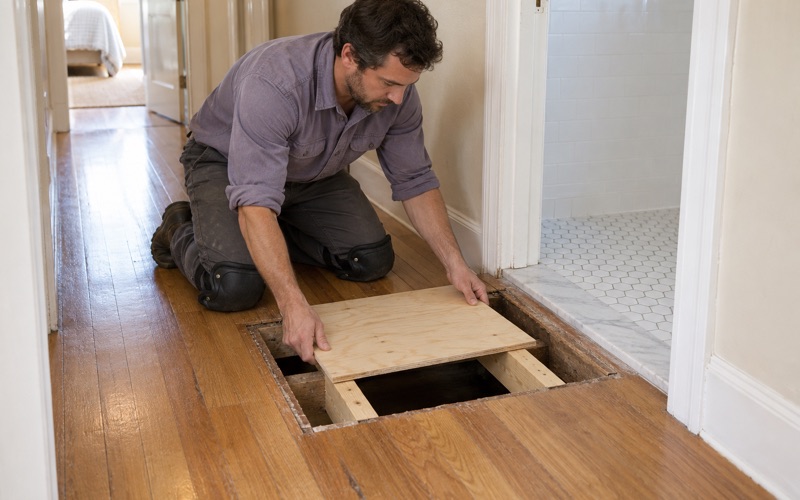
Replacement is the better call when boards are too thin to sand again, when soft or bouncy spots trace back to the subfloor or a floor joist, or when an owner wants height differences between rooms gone altogether. We trace a sagging floor to its cause before pricing a finish floor, and refer structural repairs out when they are more than a flooring job. Engineered flooring with a glue-down or floating installation can keep heights low beside tile, which helps transitions sit flush.
Every estimate is written line by line, with stairs priced per tread and riser rather than folded into a square-foot figure. For an owner deciding how much of the house to do now and how much to leave for later, that breakdown makes phasing the work much easier. It also gives family members helping with the decision a clear record of what each room will cost.
- 20+ Years in Wood Flooring
- Line-by-Line Written Estimates
- Lead-Safe Sanding on Pre-1978 Homes