Lakewood Wood Flooring brings more than 20 years of work to wood-flooring in Lynwood, and a lot of that work starts at an unusual moment: the weeks around a first home purchase. A buyer who has rented for years is suddenly responsible for every board, seam and stain in a house they have walked through maybe twice. We help them read those floors before the paperwork is final and plan what to tackle once it is.
Our approach is the same whether the floor is solid hardwood, engineered plank or something hiding under old sheet goods. We measure moisture content in the wood and in any concrete before a single board is ordered, and we write those readings down. When a floor feels soft or bouncy, we trace it to the subfloor and the joists before we price a finish floor, and we say plainly when the problem is structural work rather than flooring.
Every estimate we hand over is itemized line by line. For a new owner working with a fixed budget after closing, that format matters: it shows which rooms can wait, which repairs cannot, and what each step actually costs.
A Renter-Majority City With a Buyer Program
In Lynwood, renters outnumber owners. Census figures put 52.2 percent of occupied units in renter hands, 7,932 of 15,206 households. Many of those renters are not in apartments at all: 2,195 renter households rent a detached house, which means a good share of future buyers already know what it is like to live on an older floor they had no say over.
Owner turnover is slow by comparison. Only 377 owner households moved into their current home during 2020-2022, so a house that reaches the market has often been lived in by one family for many years. Its floors usually show that history, from worn traffic lanes to rooms covered over during a remodel nobody remembers.
What the City Offers First-Time Buyers
The City of Lynwood runs a First-Time Homebuyer Program funded through CalHome. In an October 2025 notice the City said eligible residents can receive up to $200,000 in down payment assistance. Under the program’s terms the loan is capped at 40 percent of the purchase price, up to a maximum of $200,000, and principal and interest are deferred.
The program sets its own boundaries on who and what is eligible. Household income may not exceed 80 percent of the Los Angeles County area median income, and applicants must not have owned a home or been on the title of one within the last three years. The house has to sit inside Lynwood’s city limits, and the purchase price cap is $725,000, subject to periodic adjustment.
What the Program Asks of the House Itself
The program also looks at the property, not just the buyer. The house must be free of health and safety hazards and lead poisoning exposures, and it must pass a Housing Quality Standards inspection. Eligible homes include detached houses, condominiums, townhouses and manufactured homes on a permanent foundation.
The program pages do not say what that inspection looks at, and we do not guess. What we can tell a buyer is how the floors in a particular house look to a flooring contractor, and what work we would recommend before or after closing. Questions about eligibility or the loan itself belong with the City’s program staff and the buyer’s lender.
Looking for wood-flooring closer to Seal Beach? See Wood-Flooring in Seal Beach.
Reading an Older House’s Floors Before You Buy
A showing is a poor time to judge a floor. Furniture covers the worn paths, rugs cover the stains, and fresh paint pulls the eye upward. We would rather walk the house empty, or as close to empty as the seller allows, and look at the floor as a system from the finish down.
What We Look for on a Walkthrough
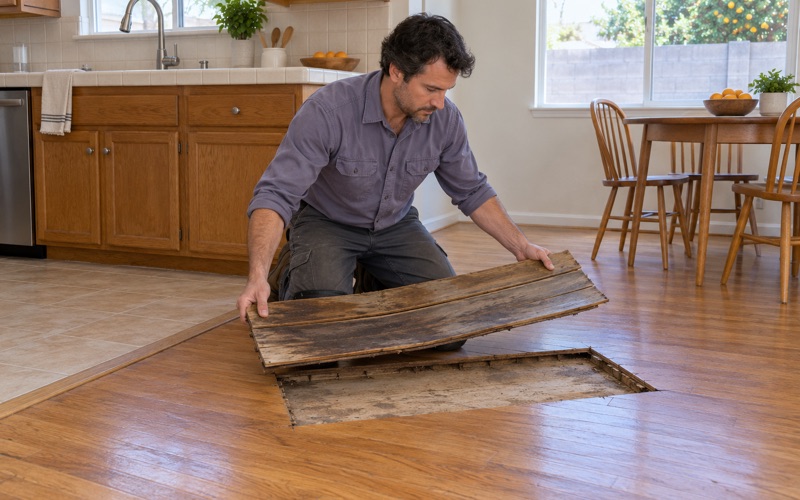
We start with the surface: cupping, crowning, board gaps, peeling polyurethane, dark water marks near the kitchen and bath, and pet urine stains that have gone black at the seams. A wood moisture meter tells us whether a stain is old history or an active problem. Then we walk every room for squeaks, nail pops and soft spots, since a floor that gives underfoot is often telling a story about the subfloor rather than the boards.
Where water damage shows, we look for its source. A dishwasher supply line, a water heater or an aging pipe under the house can each leave a pattern, and knowing which one caused it changes what the fix costs. We photograph what we find and record the readings so the buyer has something concrete to weigh.
When Carpet or Old Tile Covers the Floor
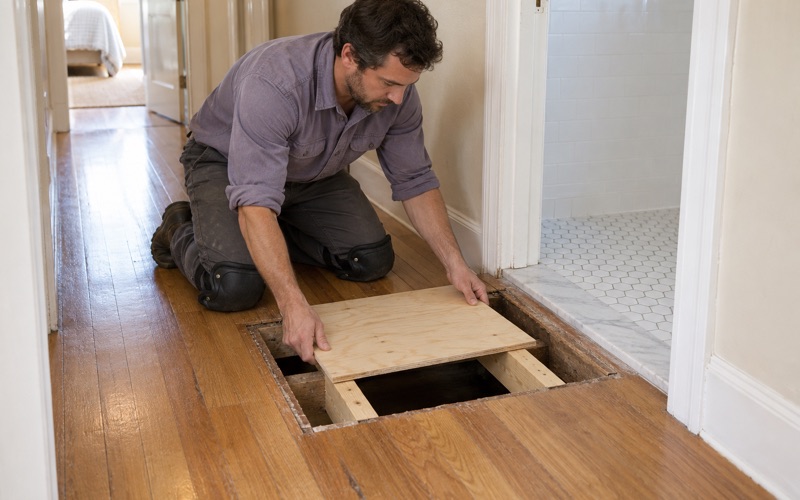
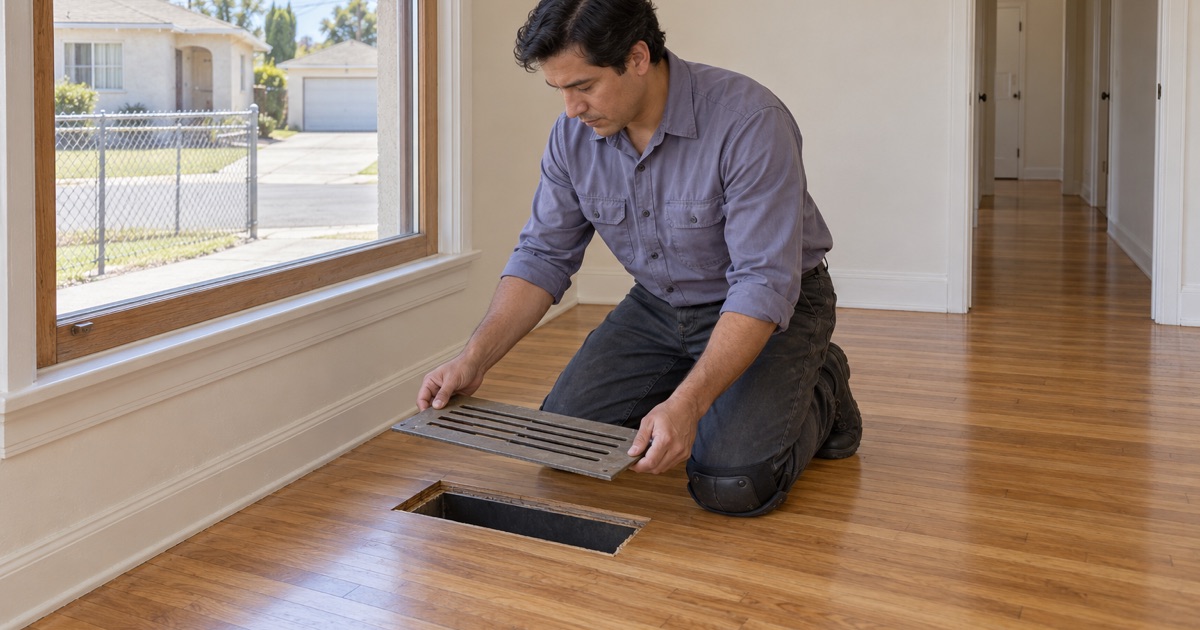
Many older houses have carpet, linoleum or small square tile laid over whatever came before. We never assume what is underneath. If we can lift a corner at a closet or a floor vent, we will, but we treat the answer as unknown until it is seen.
Old linoleum, rubber tile, 9x9 tile and black mastic get treated as a possible asbestos question before anyone scrapes or sands. That usually means an asbestos survey before work starts, which is a much easier conversation to have before closing than after the first weekend of demolition.
Putting the Findings to Work
Our notes are not an inspection report and they do not replace one. They are a flooring contractor’s read on what the floors need, with a written estimate a buyer can hold against the purchase price. Some buyers use it to plan their first year; others use it to decide which house to make an offer on in the first place.
The First Floor Projects After Closing
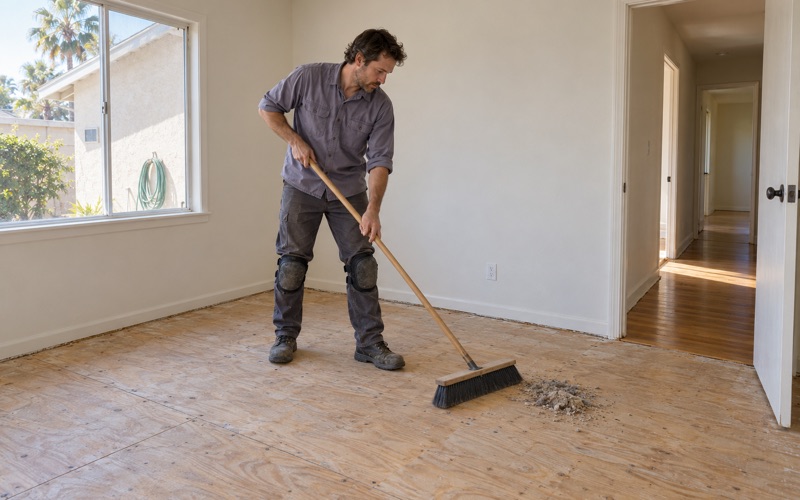
The weeks between getting the keys and moving in are the best time a new owner will ever have to work on floors. Rooms are empty, nobody is tracking through a fresh finish, and dust from sanding stays in the house rather than on a sofa. We try to fit our schedule to that window whenever we can.
Refinishing Before the Boxes Arrive
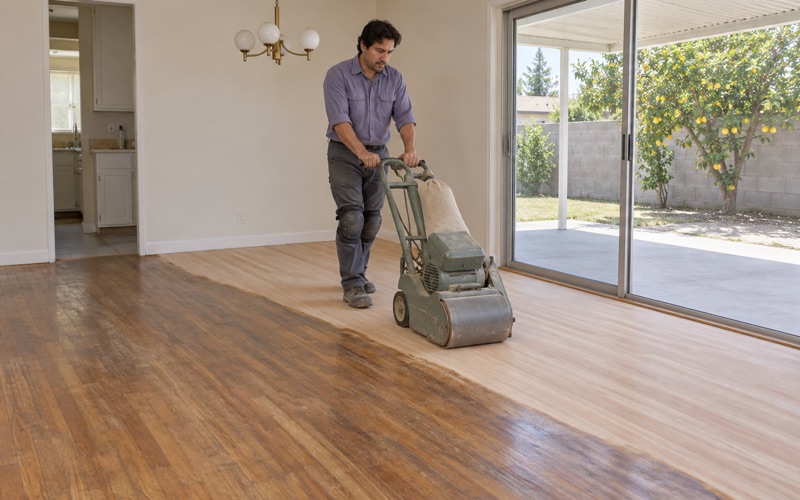
If the house has a wood floor in decent shape, a full sand and refinish is often the single project that changes the house most. We sand with a dustless system, work through a proper grit sequence with the drum sander, edger and orbital sander, and choose finishes that are legal to apply in the South Coast air basin under the 275 g/L wood-coating limit in SCAQMD Rule 1113. Waterborne polyurethane, oil-modified polyurethane and hardwax oil each wear differently, and we talk through sheen level and slip resistance before choosing.
Orange oak and blotchy stain are common complaints about floors refinished decades ago. Both usually trace back to the stain or finish chosen last time, and a full sand takes the wood back to bare so the new color is a real decision rather than an inherited one.
When a floor is sound but dull, a screen and recoat can be enough. It costs far less than a full sand and suits a new owner who wants the house livable quickly and plans bigger work later.
Repairs, Transitions and Stairs
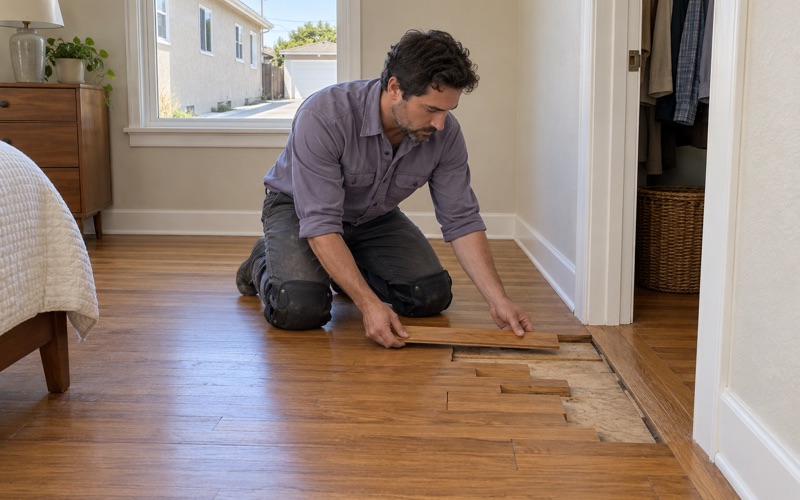
Older houses tend to collect patches: a wall removed here, a heater grate filled there, a kitchen floor raised by three layers of vinyl. We weave new boards into the existing floor so a repair does not read as a patch, and we fit reducer strips, T-molding and shoe molding where old and new floors meet.
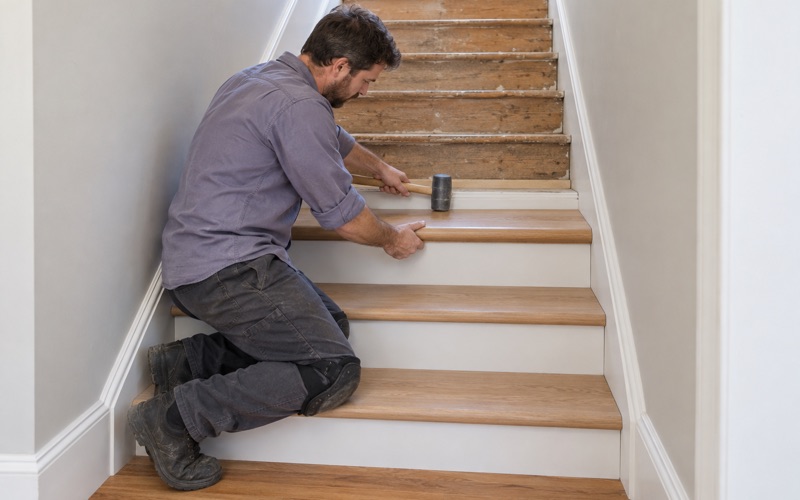
Stairs get priced per tread and riser, with nosing handled as its own item. Folding them into a square-foot number hides what they really cost, and new owners deserve to see it.
Scheduling Around a Move-In Date
We work inside allowed construction hours and hand every household a written cure schedule. That schedule tells a buyer which room can take furniture on which day, so the movers are booked for a date the floor can actually handle.
Floors in Lynwood’s 1940s and 1950s Houses
Lynwood was incorporated on July 16, 1921, and much of what stands today went up in the 1940s and 1950s. Census figures show 85.9 percent of the city’s housing units predate 1980, and the 1940s are the single biggest building decade, at 26.3 percent of all units. The 1950s follow close behind, and 18.9 percent of units predate 1940.
Lead-Safe Work on Pre-1978 Houses
A house of that age almost always falls under the EPA Renovation, Repair and Painting rule, and sanding can raise lead dust from old paint on baseboards, thresholds and trim. We follow lead-safe work practices on pre-1978 housing, containing the work area and cleaning to a standard that suits a household moving in with children. The City’s own program language about lead poisoning exposures is a good reminder that this is not a detail to skip.
Moisture, Acclimation and Mixed Materials
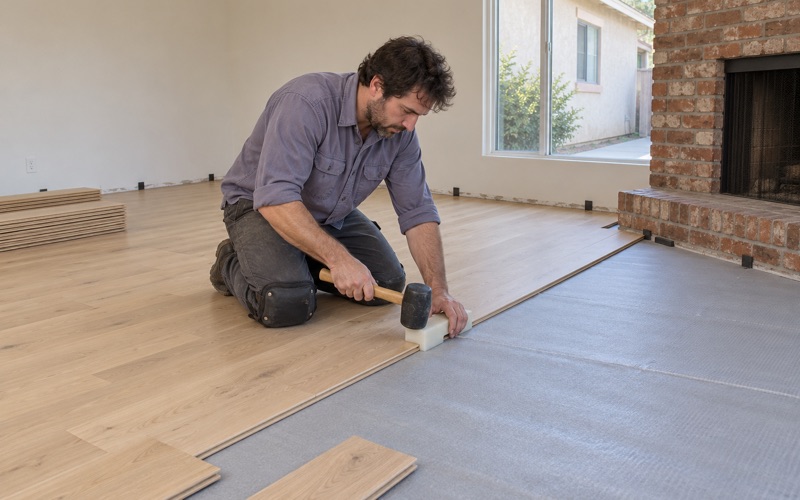
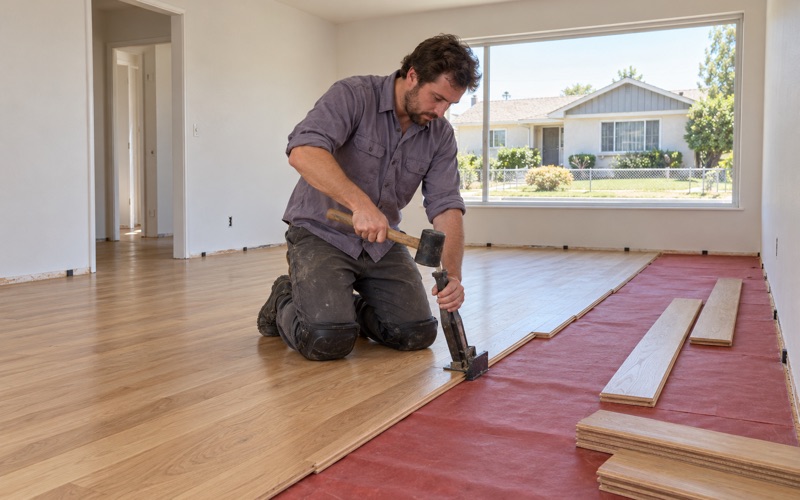
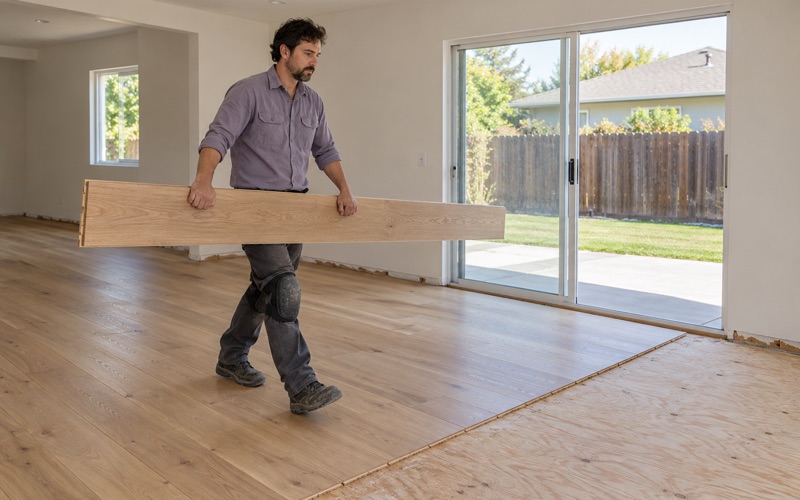
Houses from this era often hold a mix of flooring from several remodels, sometimes over different substrates in different rooms. Before we install new hardwood or engineered plank, we check moisture in the wood, run a calcium chloride or ASTM F2170 in-situ relative humidity test on any concrete, and let the material acclimate on site. We follow NWFA installation guidelines for nail-down, glue-down or floating installation, depending on what the subfloor will support.
Choosing Wood for a First House
A first-time owner rarely wants to redo floors twice. We walk through species by Janka hardness rating, from red oak and white oak to hickory and maple, and through wear layer thickness on engineered products, since a thicker wear layer allows more future refinishing.
Layout is the other half of the choice. Wide plank can make a small postwar living room feel calmer, while a herringbone or chevron pattern works best in an entry or dining room where it can be seen whole. The aim is a floor the household can live on hard for years, in a house they finally own.
- 20+ Years in Wood Flooring
- Line-by-Line Written Estimates
- Lead-Safe Sanding on Pre-1978 Homes