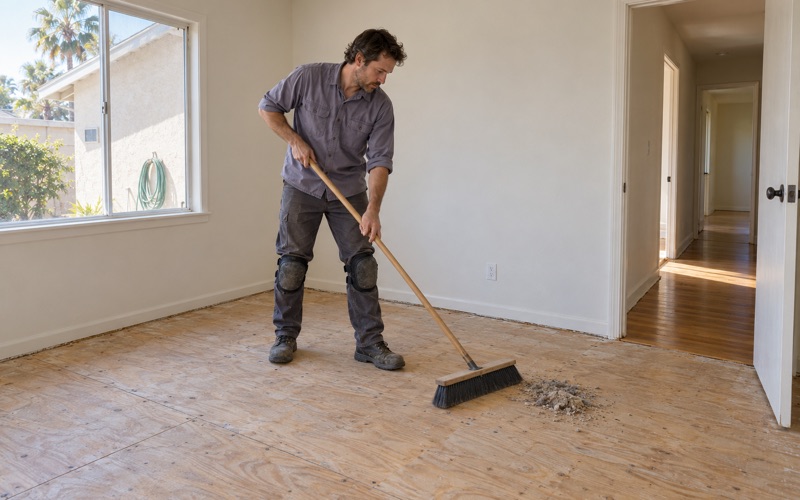
Lakewood Wood Flooring has spent more than 20 years on wood-flooring in Palos Verdes Estates and the rest of our service area, and the work here leans heavily toward houses that already have a floor worth reading. We refinish, repair, weave in new boards, install solid and engineered hardwood, and rebuild stairs, and in most homes the first job is finding out what is actually underfoot.
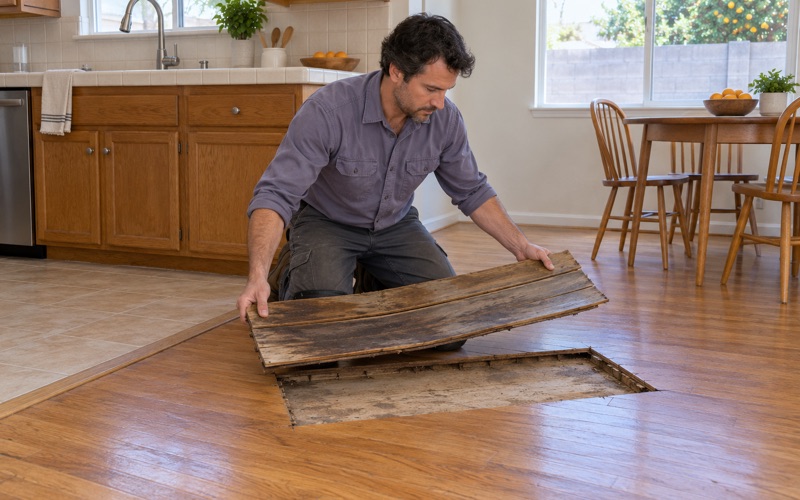
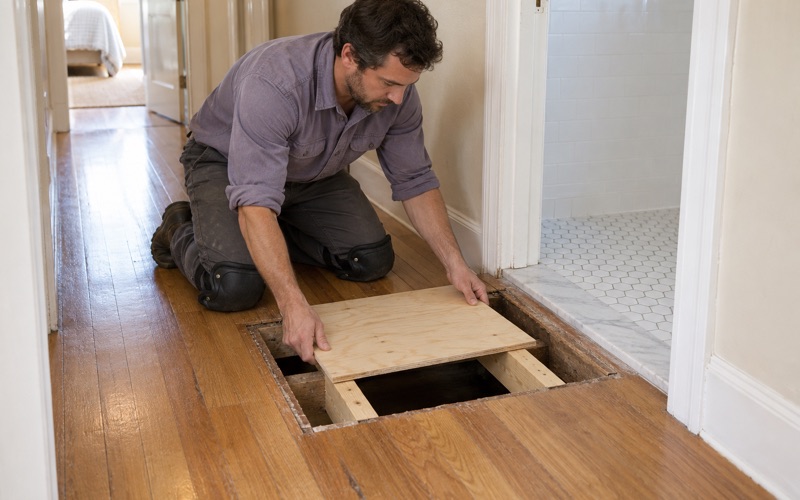
That means lifting a corner of carpet, checking the moisture content of the boards with a wood moisture meter, and looking at how the floor behaves where people walk most. A soft spot, a squeak or a line of gaps usually has a cause we can trace to the subfloor or the framing below it. We price the floor only after that cause is on paper, and structural work goes to the right trade when it is more than a flooring job.
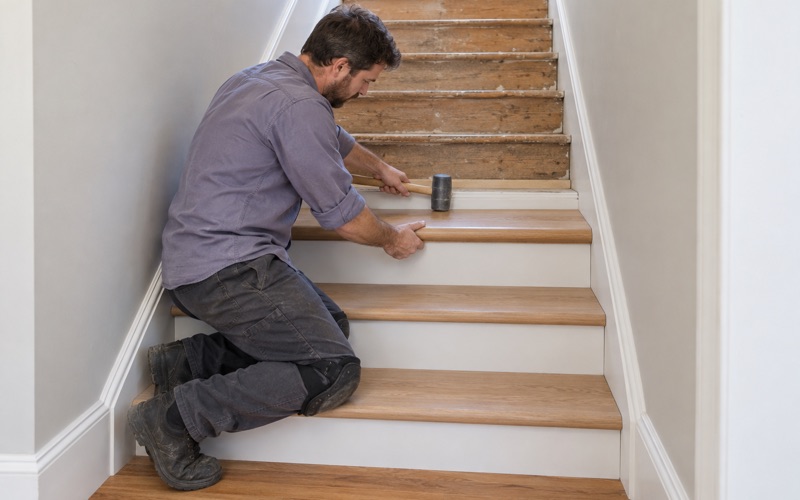
Every estimate we write is itemized line by line, so you can see what sanding, repair, finish and stairs each cost. Stairs are priced per tread and riser instead of hiding inside a square-foot figure, and the cure schedule is written down so you know when each room is usable again.
Malaga Cove and the Art Jury’s First Decade
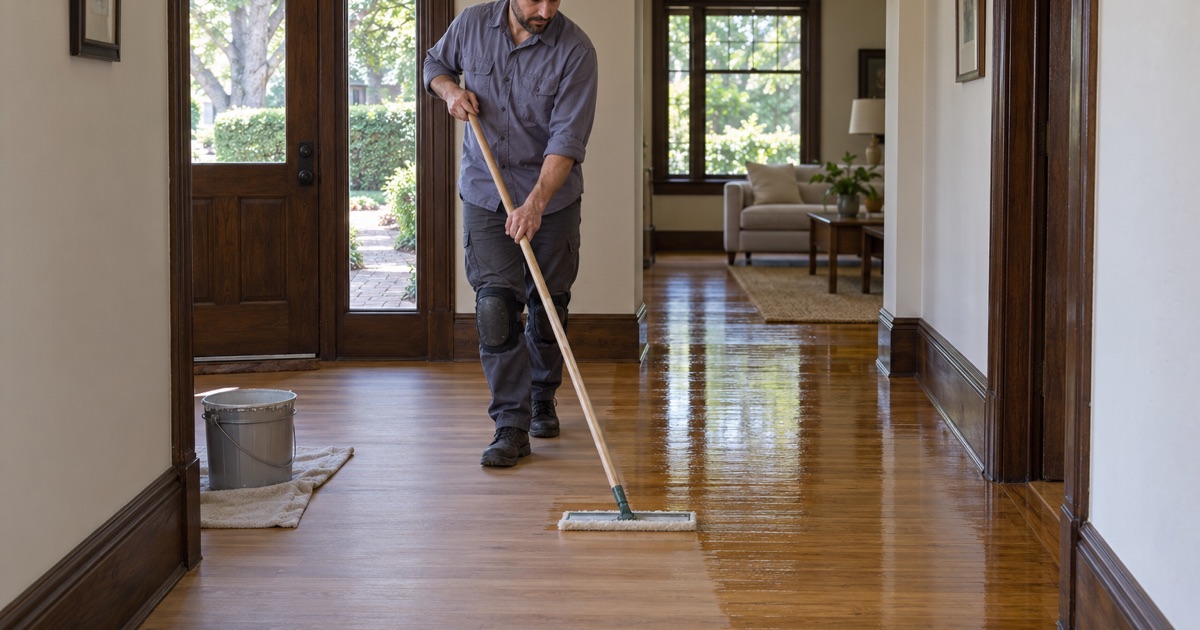
Much of what makes floor work here different starts in one neighborhood. Malaga Cove takes its name from Malaga, the Spanish port city, and it was meant to look like a Mediterranean coastal village. It was also the first part of the planned city where people actually settled in numbers.
The Peninsula’s Population Center in 1930
The 1996 National Register form for the Malaga Cove library describes Malaga Cove as the Peninsula’s population center in 1930. The same document calls Palos Verdes Estates the first and only established community on the Peninsula that year. In practical terms, the oldest concentration of houses in the city sits in and around this neighborhood, and the floors inside them have had nearly a century to collect finishes, patches and coverings.
Quality of Construction, Not Only Looks
According to that National Register form, the Art Jury was established in 1922 with Myron Hunt as its chair. Its job, as the form puts it, was to monitor both quality of construction and exterior architectural design for commercial and residential building. Other sources give different founding years, so we cite the form rather than treat any single date as settled.
The phrase that matters to us is quality of construction. A neighborhood whose early building was watched that closely is exactly where we assess before we recommend tearing anything out. A sound floor that has been covered for decades can often be brought back instead of replaced.
One Dominant Type of Architecture
Art Jury minutes from December 4, 1922, quoted in the form, record Hunt proposing that there should be one generally dominant type of architecture for the whole project. Minutes from 1928 describe light colors, plaster, adobe, stucco or concrete walls, and low-pitched tile roofs. That is the Mediterranean Revival character people still recognize in Malaga Cove today, and it shapes how owners want the inside of these homes to feel.
Looking for wood-flooring closer to San Marino? See Wood-Flooring Services in San Marino.
Reading a Floor in a Founding-Era House
We walk into a Malaga Cove house from the 1920s or 1930s without assumptions about what the floor is made of. Nothing in the record we work from names the species or layout used in these rooms, so the only honest answer comes from the floor itself. We identify the wood, measure its thickness and look at how it was fastened before we say what it can take.
Layers Added Over the Decades
Old houses rarely keep one surface for long. We find linoleum, rubber floor tile, 9x9 tile and carpet laid over wood, sometimes two or three layers deep, often with black mastic underneath. Any of those older resilient materials can be an asbestos question, so we treat them as one and arrange an asbestos survey before anything gets scraped, ground or sanded.
Once the coverings are dealt with, we look for what they were hiding. Water stains, old pet urine stains, board gaps, cupping near an exterior door and nail pops all tell us something about the history of the room. Each one goes on the estimate as its own line with its own repair.
Lead Dust and Older Finishes
Houses of this age predate 1978 by decades, and the EPA Renovation, Repair and Painting rule applies to pre-1978 housing. We work with lead-safe practices, because sanding through old finishes and disturbing painted baseboards or shoe molding can release lead dust. Containment, a dustless sanding system and careful cleanup are part of the job, not an upgrade.
When the Floor Has Given Enough
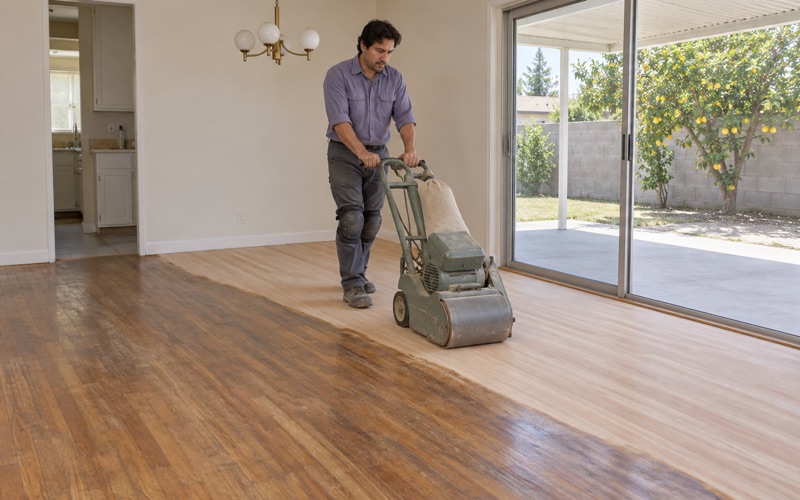
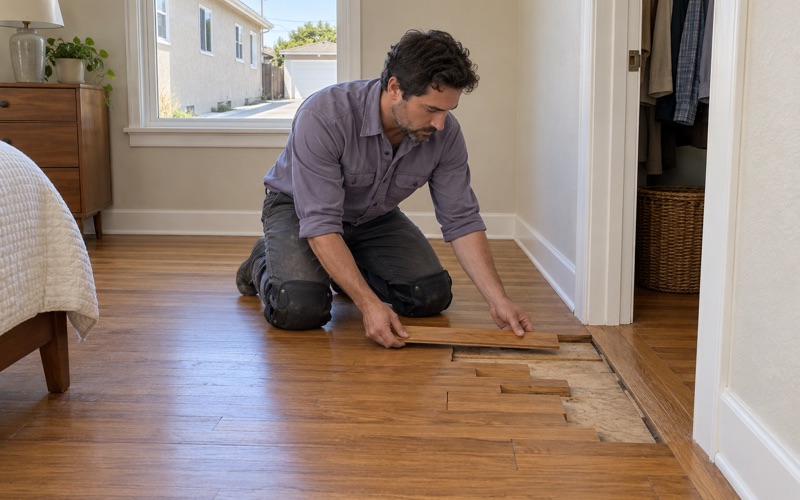
A floor that has been sanded several times may not have much wear layer left above the tongue. We check that before promising a full sand with a drum sander and edger, and we will say so plainly when a screen and recoat is the better choice. Where boards are too damaged or too thin, we replace them individually and weave the new ones in so the repair does not read as a patch.
Newer Houses Among the Originals
For all its history, Palos Verdes Estates is mostly a midcentury city. Census figures put only 4.5 percent of housing units before 1940, while 52.0 percent were built between 1950 and 1969. In Malaga Cove, that means founding-era houses often stand beside later infill, and a single street can hold floors from very different decades.
What the Numbers Mean for Floor Work
Most of the floors we see in the city were laid after World War II, not in the 1920s. Those later houses bring their own patterns, such as strip hardwood under wall-to-wall carpet, kitchens refloored more than once, and additions where one room’s boards run a different direction from the next. We plan each of those differently from a floor in an original Mediterranean Revival house.
Ownership is also unusually steady here. About 89.7 percent of households own their homes, so most of our clients plan to stay, and they tend to ask for work that will hold up for years rather than a quick cosmetic pass. That usually points toward a thorough refinish, a careful repair, or a new floor chosen for the long run.
Matching Old and New
Remodels in older neighborhoods often remove a wall or join a newer room to an original one. We weave new boards into the existing floor, match the width and direction where we can, and blend the stain so the seam disappears. When an exact match is not possible, a reducer strip or T-molding at a doorway can be the cleaner answer, and we will show you both options.
Choosing Wood for a Later House
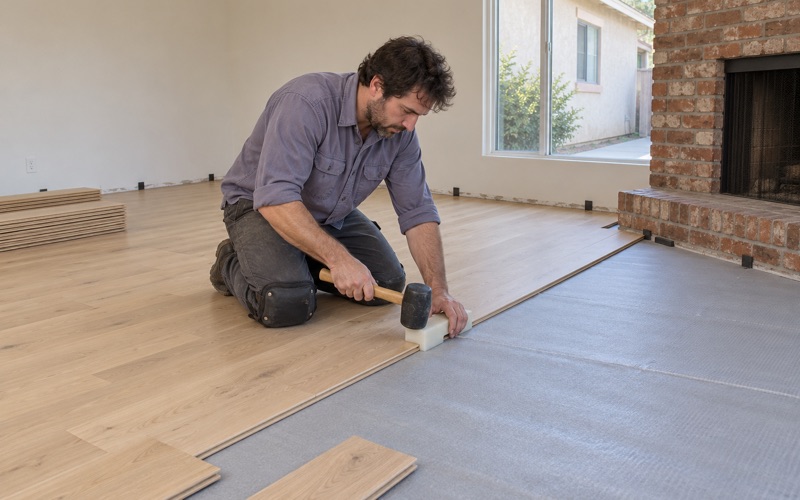
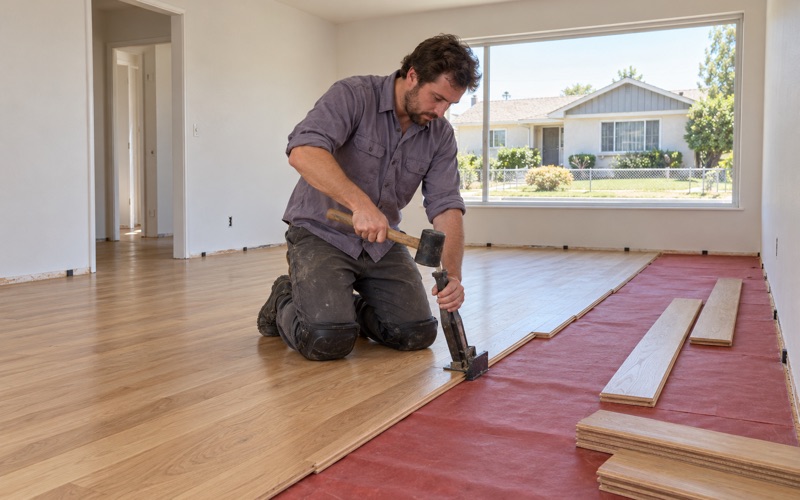
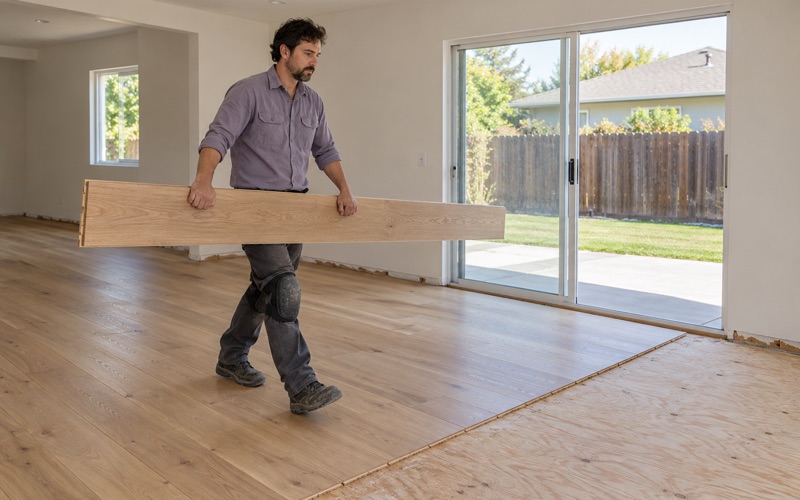
When a floor has to be replaced, we talk through white oak, red oak, hickory and maple, including how each rates on the Janka hardness rating. Wide plank, herringbone and chevron patterns all have a place, and engineered hardwood is worth considering where a thinner profile or a glue-down or floating installation suits the room. We follow NWFA installation guidelines for acclimation, expansion gaps and fastening, whether that is a cleat nail or a flooring staple.
Planning Floor Work in Malaga Cove
The practical side of a project here is mostly about sequence. We want the moisture readings, the layers, the finish choice and the schedule settled before any material is ordered.
Talking With the Right Offices First
Palos Verdes Estates has two separate bodies that owners deal with: the City of Palos Verdes Estates Planning and Building Department, and the Palos Verdes Homes Association, whose Art Jury reviews exterior appearance. The joint City and Homes Association brochure encourages owners to consult staff at both when contemplating any change, no matter the scale. We do not tell clients what either office will say about interior floor work, so if you have a question about your property, those staff members are the ones to ask.
If your project also touches the outside of the house, such as a new door, a window or an addition, that part runs through its own review. The Homes Association keeps plans for all structures in Palos Verdes Estates and Miraleste, which can be useful when you want to know what was originally approved for your house.
Moisture, Finish and Air Rules
We record moisture in the wood, and in any concrete we are going over, with the readings written down before material arrives. Where concrete is involved, that can mean an ASTM F2170 in-situ relative humidity test or a calcium chloride moisture test, and a vapor retarder where the readings call for one. New wood acclimates in the house until its moisture content is where it should be.
Every finish we apply is legal in the South Coast air basin. SCAQMD Rule 1113 sets a VOC limit of 275 g/L for wood coatings, so we choose among waterborne polyurethane, oil-modified polyurethane and hardwax oil finishes that meet it. We will walk you through sheen level too, since a lower sheen hides wear better and helps a floor feel right in an older interior.
Schedule, Cure Time and Paperwork
We work within permitted construction hours and hand you a written cure schedule, so you know when furniture can go back and when rugs can go down. If water damage started the project, we trace it to its source and document it with photos and moisture readings an adjuster can use. Our line-by-line estimates follow the format the California Department of Insurance tells homeowners to ask for on a claim.
- 20+ Years in Wood Flooring
- Line-by-Line Written Estimates
- Lead-Safe Sanding on Pre-1978 Homes