
Lakewood Wood Flooring helps homeowners replace carpet with hardwood in Lakewood, CA, bringing more than 20 years of wood flooring work, and serving surrounding cities including Artesia, Bellflower, Hawaiian Gardens, Cerritos and Signal Hill. We take up the carpet, check what is underneath, and then either restore the hardwood already there or install new hardwood over a sound, level subfloor.
In this city, the first question is always whether there is hardwood under the carpet already. More than half of Lakewood’s homes were built in the 1950s, and the original Lakewood Park homes were advertised with hardwood floors. Many of those floors were carpeted in later decades and are still there, often in good condition.
If the original oak is there, refinishing it usually costs less than installing new flooring and keeps a floor that can be sanded many more times. If it is not, or the wood is too damaged, we plan a new installation. Either way, the estimate is written line by line, separating carpet removal, repairs, refinishing or new material, and trim.
Checking What Is Under the Carpet
Finding Original Hardwood
We lift a corner of the carpet, usually in a closet or along a wall, to see what lies beneath. Original oak strip flooring is common in homes of this era, and we identify the species, board width and remaining thickness above the tongue.
That thickness decides what the floor can take. A floor with plenty of wood left can be fully sanded and refinished, while a floor already sanded several times may call for a gentler approach or selective board replacement.
Tack Strip, Staples and Pad Damage
Carpet installers nail tack strip around the edges of the room and staple the pad across the floor. Once those are removed, we fill the nail holes, pull every staple and check for stains where pet accidents or spills soaked through the pad.
Most of these marks disappear during sanding. Boards with deep stains or damaged edges can be cut out and replaced with matching wood woven into the floor.
When There Is No Hardwood Underneath
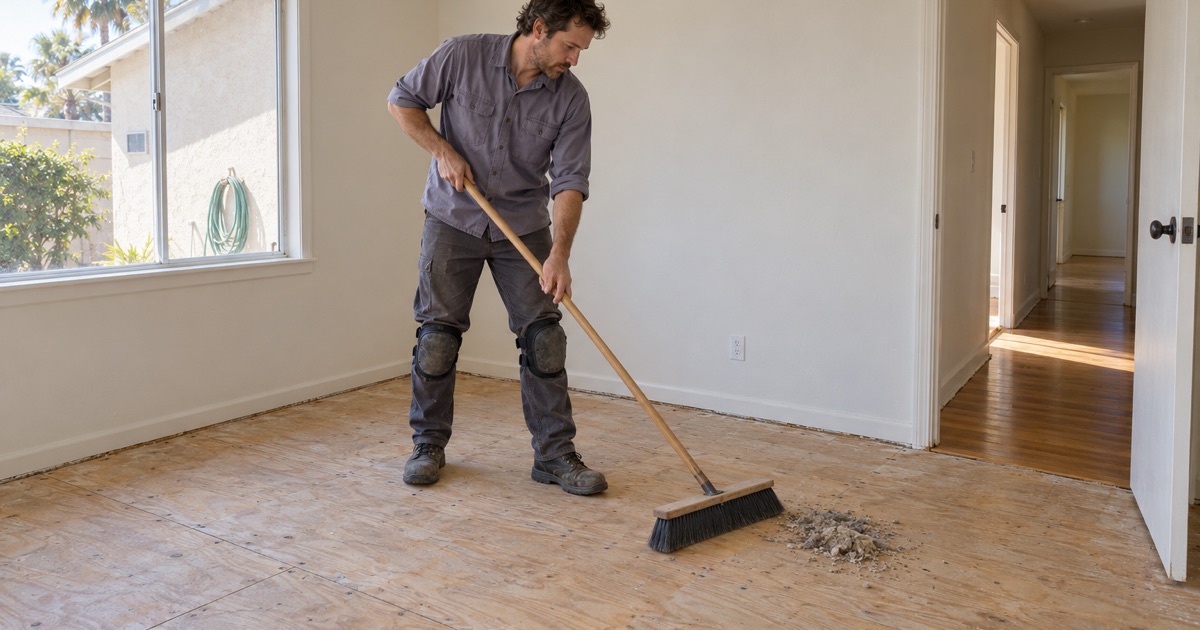
Some rooms, especially additions and converted garages, have a plywood subfloor or concrete slab under the carpet rather than hardwood. In those cases we move to a new installation, testing the substrate and choosing solid or engineered hardwood to suit it.
Restoring the Hardwood You Already Have
Sanding and Refinishing
A hardwood floor that has spent decades under carpet often looks better than people expect, since it has been protected from sunlight and foot traffic. We sand it back to bare wood through a grit sequence, make any board repairs and apply your chosen stain and finish.
Older oak finishes often amber toward orange. Sanding removes that aged finish, and a waterborne polyurethane or a toned stain lets you choose a color closer to natural wood.
Lead-Safe Work in Older Homes
Almost every Lakewood home was built before 1978, and sanding near original painted baseboards and trim can release lead dust. We follow EPA Renovation, Repair and Painting rule work practices, contain the work area and use dust extraction while sanding.
Low-VOC Finish Options
The finishes we apply meet SCAQMD Rule 1113’s 275 g/L VOC limit for wood coatings in the South Coast air basin. We explain the difference between waterborne and oil-modified polyurethane, and hardwax oil options, so you choose a finish that suits your household.
We also give you a written cure schedule. It shows when you can walk on the new finish in socks, when furniture can return on felt pads, and when rugs can go back down, so the floor you just uncovered is not marked in its first week.
Installing New Hardwood Where Carpet Was
Subfloor Checks After Carpet Removal
Carpet hides a lot. Once it is gone, we check the subfloor for soft spots, loose boards, squeaks and uneven areas, and trace any bounce to the joists. Repairs are made before new hardwood goes down, because a new floor inherits every problem underneath it.
Where a soft area turns out to be rot from an old leak or termite damage in the joists, we repair what is within a flooring job and refer larger structural work out. You will know what we found, and what it adds to the estimate, before any new boards are ordered.
Old Linoleum and Tile Found Along the Way
Carpet sometimes sits over an older layer of linoleum, rubber tile or 9x9 tile, particularly in hallways and former kitchen areas. Those materials and the black mastic beneath them can contain asbestos, so we stop and arrange an asbestos survey before any of it is disturbed.
Moisture Testing
Before ordering new material, we measure moisture content in the subfloor with a wood moisture meter, or test a slab with a calcium chloride test or an ASTM F2170 relative humidity test. The readings decide whether solid or engineered hardwood fits, and whether a vapor retarder is needed.
Matching New Floors to Existing Hardwood
When carpet comes out of a bedroom next to a hardwood hallway, the new floor should look like it was always there. We match species and width, weave new boards into the existing floor at the doorway and refinish the connected rooms together so the color is consistent.
Transitions, Stairs and Trim
Doorways and Height Changes
Hardwood usually sits at a different height from compressed carpet, so doorways and transitions to tile or vinyl need planning. We install reducer strips, T-molding or thresholds where heights change, and check that doors clear the new floor.
Carpeted Stairs
If the stairs are carpeted too, they can be converted at the same time. We price stairs per tread and riser, and we match their stain and nosing to the new or refinished floor.
Baseboards and Shoe Molding
We remove and reinstall shoe molding or add new molding where needed, so the edge of the floor is finished neatly against the baseboard. On pre-1978 homes, we handle painted trim with the same lead-safe practices used during sanding.
- 20+ Years in Wood Flooring
- Line-by-Line Written Estimates
- Lead-Safe Sanding on Pre-1978 Homes