Lakewood Wood Flooring brings more than 20 years of experience to wood flooring in Rossmoor, and every job here starts with a calendar as much as a moisture meter. Sanding, installation and finishing each make a different kind of noise, and each has to land on a day and an hour when that noise is allowed. We build the schedule first, then fit the boards and the coats inside it.
That order matters because a floor job is rarely one day. A full refinish can mean a day of sanding, a day or more of stain and coats, and cure time before furniture comes back. An installation adds tear-out, subfloor prep and the nailing itself, so we map every loud step to a specific morning before the first box of flooring is delivered.
Every estimate we hand over is written line by line, and every schedule comes with a written cure plan. You know which room is out of service, on which day, and when you can walk on it in socks again.
Why Orange County’s Noise Code Sets the Hours in Rossmoor
Rossmoor is an unincorporated community of Orange County, which means there is no city council, no city hall and no city noise ordinance. The rules that reach a Rossmoor house on a workday are the county’s own, written for the unincorporated areas the county governs directly. The Rossmoor Homeowners Association is a voluntary group, and it says plainly that it is not an HOA, so the clock is not coming from a neighborhood board either.
A County Code, Enforced by County Officials
Orange County’s Noise Control article was adopted as Ordinance No. 2700 on September 19, 1973, and it states its purpose as controlling unnecessary, excessive and annoying sounds from unincorporated areas of the county. The whole county sits in a single noise zone, Noise Zone 1. For a homeowner, the practical point is simple: when we plan work hours in Rossmoor, we read the county’s text rather than a neighboring city’s.
The article names three officials to enforce it: the Orange County Sheriff, the County Health Officer and the County Building Official. A violation of the article is a misdemeanor. We would rather never test that, so our crews treat the county’s hours as the outer edge of the workday rather than a target to push against.
Two Windows in Section 4-6-7
The county sets general sound standards and then lists activities that are exempt from them when they stay inside certain hours. Two of those exemptions matter to anyone planning floor work, and they do not use the same clock.
Section 4-6-7(e) exempts noise from construction, repair, remodeling or grading of real property, provided the work does not take place between 8:00 p.m. and 7:00 a.m. Monday through Saturday. It also does not apply at any time on a Sunday or a federal holiday. In plain terms, that exemption covers daytime and early evening hours six days a week and none of Sunday.
Section 4-6-7(i) covers noise from the maintenance of real property on a different schedule. That exemption applies from 7:00 a.m. to 8:00 p.m. on any day except a Sunday or federal holiday, and from 9:00 a.m. to 8:00 p.m. on those days. So maintenance keeps a later start on Sundays and holidays, while construction, repair and remodeling get no Sunday window at all.
Why We Quote Both and Pick Neither
The ordinance does not say which of those two categories a floor refinish belongs to, and we are not going to decide it for the county. What we do is plan loud work so it fits the tighter reading. That means no drum sander, edger or nail gun running on a Sunday or federal holiday, nothing before 7:00 a.m., and nothing after 8:00 p.m. on any day.
The code also sets an interior standard for homes of 55 dB(A) from 7:00 a.m. to 10:00 p.m. and 45 dB(A) at night. We have not measured our equipment against those numbers, and we do not claim a reading either way. The standard is one more reason we keep sanding days short, daytime and announced.
Looking for wood-flooring closer to Los Alamitos? See Wood-Flooring in Los Alamitos.
Planning Sanding, Installation and Finishing Days
Not every step of a wood floor job is loud. Sorting the work into loud days and quiet days is how we fit a full project into the county’s hours without dragging it out for weeks.
Loud Days: Tear-Out, Sanding and Nailing
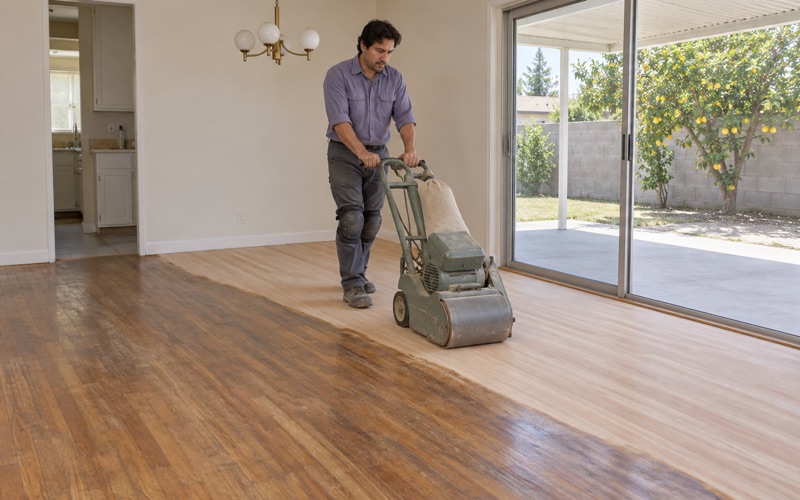
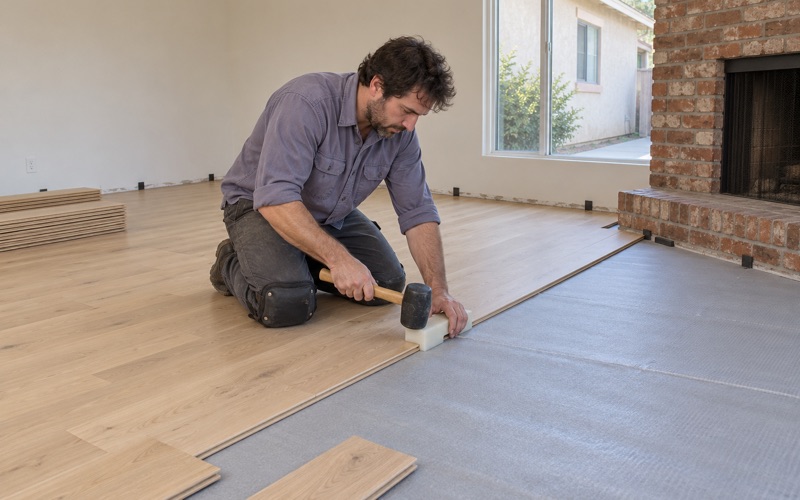
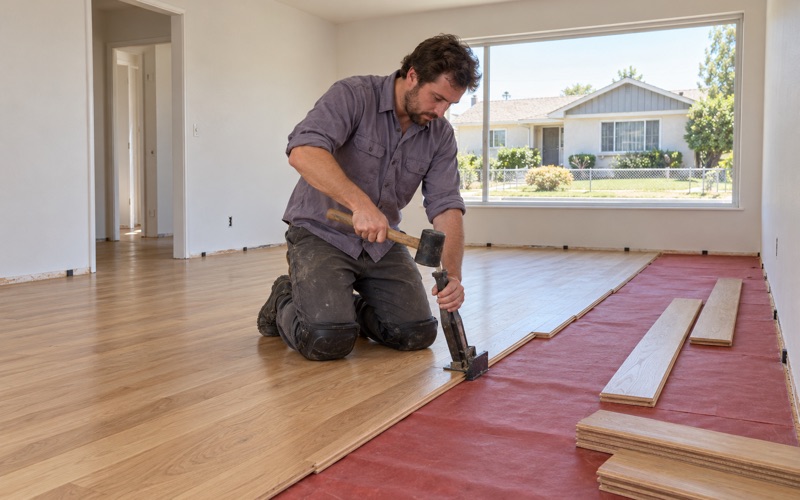
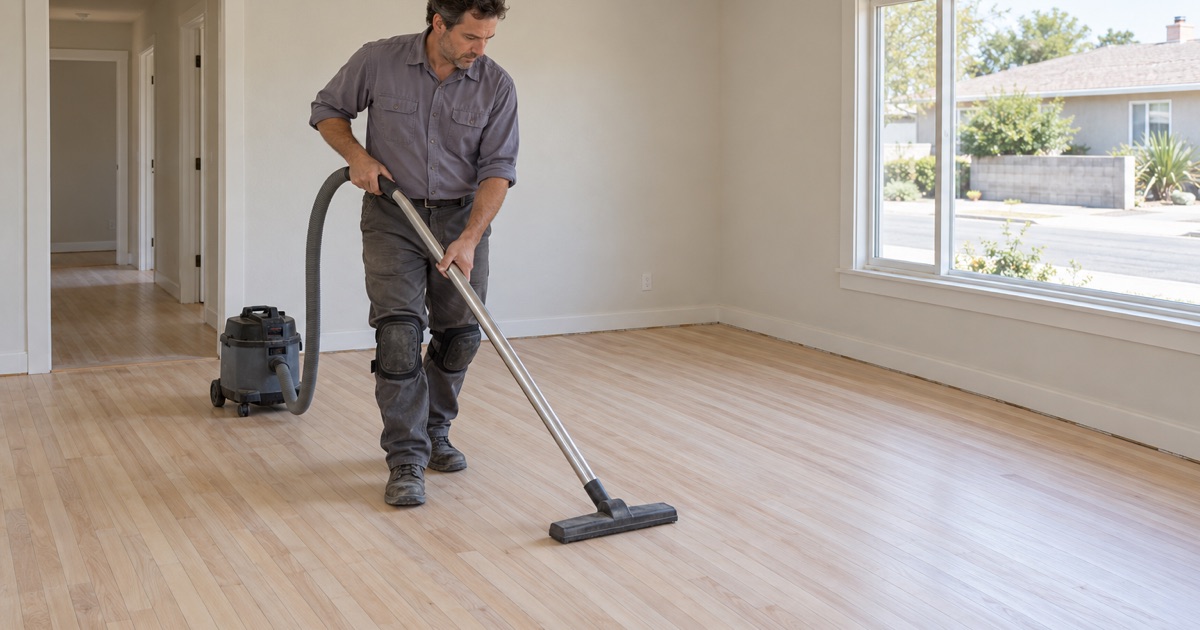
Pulling up old carpet, linoleum or tile, running a drum sander through the grit sequence and working the edger along the walls are the noisiest parts of any job. So is nail-down installation, where every cleat nail or flooring staple is driven with a pneumatic tool. We group these steps into weekday blocks, starting after 7:00 a.m. and wrapping well before evening, and we use a dustless sanding system to keep fine dust out of the rest of the house.
Old linoleum, rubber tile and 9x9 tile get extra care before anything is scraped. We treat those materials and any black mastic under them as a possible asbestos question and stop to test before tear-out rather than after. On pre-1978 houses we also follow lead-safe practices, because lead dust from sanding old painted trim and baseboards is a real concern in a neighborhood this age.
Quiet Days: Staining, Coating and Cure
Staining and applying finish coats are nearly silent by comparison, but they carry their own clock. Each coat needs dry time before the next, and the last coat needs cure time before rugs and furniture go back. We only use finishes that are legal to apply in the South Coast air basin, which caps wood coatings at 275 grams per liter of VOCs under SCAQMD Rule 1113.
Waterborne polyurethane usually allows more than one coat in a day, while an oil-modified product or a hardwax oil finish stretches the schedule. We choose with you based on sheen level, wear and how long the household can stay off the floor.
Measuring Before Material Arrives
Before we order a single board, we check moisture content in the existing wood and, where there is concrete, in the concrete using a calcium chloride test or an ASTM F2170 in-situ relative humidity test. Those readings are written down and handed to you. Acclimation time for new flooring goes on the calendar too, so delivery is planned several days before the first loud installation morning.
Working Around Neighbors on Rossmoor Streets
Rossmoor is mostly single-family houses set close together. Of the community’s 3,996 housing units, 89.6 percent are one-unit detached homes, and 89.8 percent of occupied units are owner-occupied, so most houses on a street are lived in by the people who own them. A sander running in one living room is heard in the next yard, and we plan like it.
Telling the Street What Is Coming
Before a sanding or nailing day, we suggest a short note to the houses on either side and across the street. It names the days, the rough hours and when the loud part ends. Neighbors who know a sander stops by mid-afternoon on Thursday rarely pick up the phone to call anyone about it.
Keeping the Work Inside the House
Dust collection on our sanders keeps debris inside the bag rather than on the driveway. We set up cutting stations in the garage or yard where it is least likely to bother anyone, and we keep doors and windows closed during the loudest work. Trucks park so they do not block neighboring driveways on streets where curb space is tight.
Townhouse Owners Have One More Layer
The Rossmoor Town Houses are part of Rossmoor, and modifications there have to meet the same county standards plus any requirements of the Rossmoor Town House Association. If your unit is in that complex, we ask you to check the association’s rules on work hours and flooring before we set dates. Attached walls and shared floors change how far sound carries, and the association may ask for more than the county does.
Floor Work in a 1950s and 1960s Owner Tract
Rossmoor was developed from 1955 through 1961, and census figures show 82.0 percent of its units were built between 1950 and 1969. That makes nearly every job here a job on a house that is now more than 60 years old, and it shapes how we approach the floor before we ever plan a sanding day.
Assessing What Is Already There
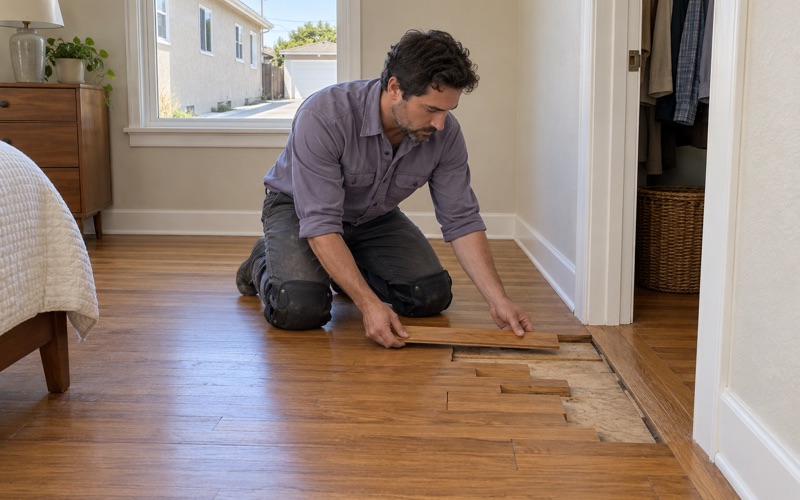
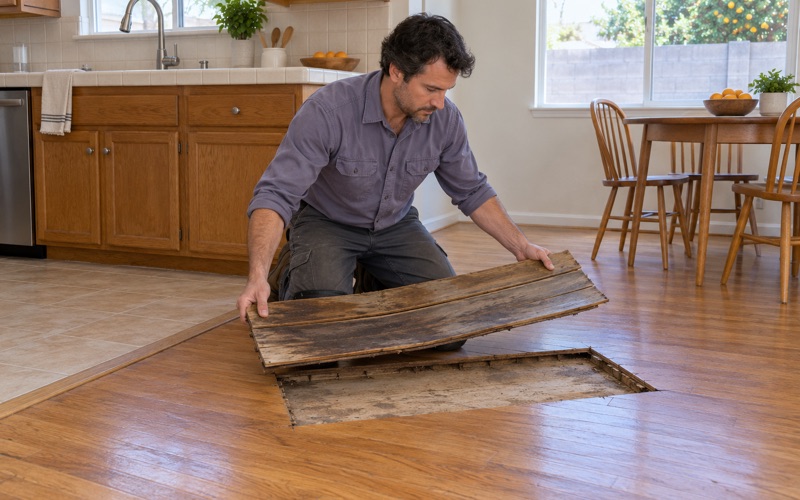
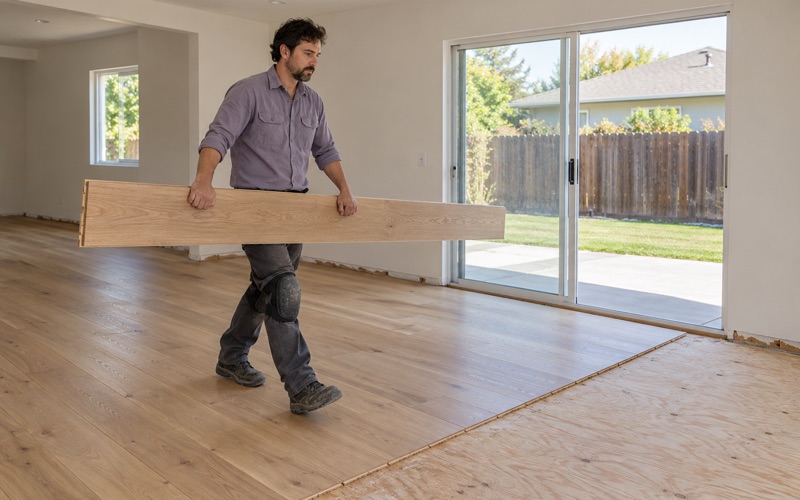
We do not assume what is under old carpet or linoleum in any Rossmoor house. We pull a corner, look and test, and only then talk about refinishing, repairing or replacing. If a room was added or a wall came out years ago, we weave new boards into the existing floor so the patch disappears instead of reading as a seam.
Soft Spots, Squeaks and the Structure Below
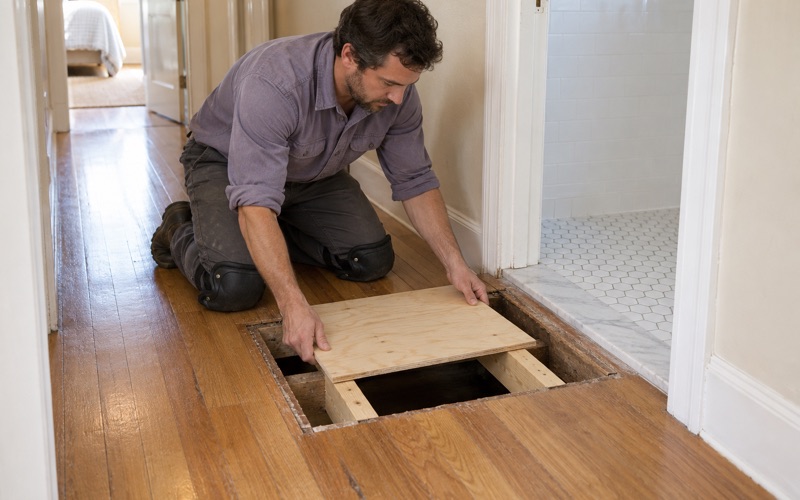
Sagging, bouncy and soft spots get traced down to the subfloor and floor joists before we price a finish floor. If the fix is joist sistering or other structural work that goes beyond flooring, we say so and refer it out rather than covering it with new boards. Squeaks, nail pops, cupping and board gaps each point to something specific, and we name the cause in writing.
Water Damage and Written Estimates
Kitchens and laundry areas in houses this age can hide slow leaks from a dishwasher supply line or a water heater. We trace water damage to its source, take photos and moisture readings, and put everything into a line-by-line estimate, the format the California Department of Insurance tells homeowners to ask for on a claim. Stairs are priced per tread and riser rather than folded into a square-foot number, so every part of the job is visible before it starts.
- 20+ Years in Wood Flooring
- Line-by-Line Written Estimates
- Lead-Safe Sanding on Pre-1978 Homes